
Neuro-fuzzy system for 3-dof parallel robot manipulator
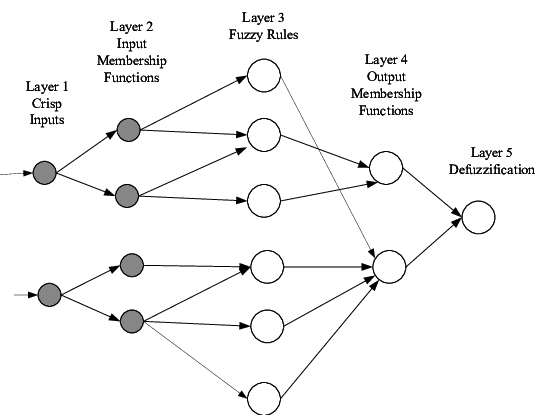
Planar Parallel manipulators (PPMs) are widely used these days, as they have many advantages compared to their serial counterparts. However, their inverse and direct kinematics are hard to obtain, due to the complexity of the manipulators' behavior. Therefore, this paper provides a comparative analysis for two methods that were used to obtain the inverse kinematics of a 3-RRR manipulator. Instead of the conventional algebraic and graphical methods used for attaining the mathematical models for such manipulators, an adaptive neuro-fuzzy inference structure (AFNIS) model was alternatively
Improved Production Key Performance Indicators (KPI’s) Using Intelligent-Manufacturing Execution Systems (I-MES)
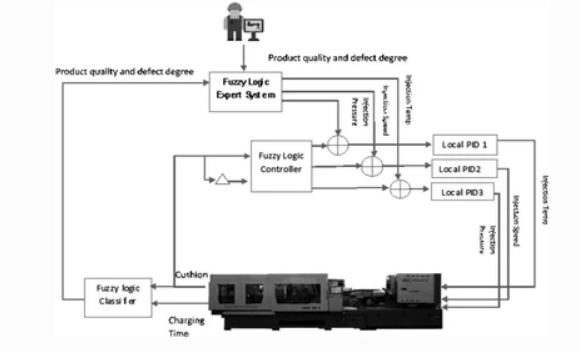
The aim of this research is to reduce the gap between manufacture expertise and management expertise by using modern technology like Manufacturing Execution System (MES) via Artificial Intelligence (AI) and Machin Learning (ML). A design of MES has been proposed and implemented on El-Araby Plastic Injection Molding (PIM) factory. This work is based on the International Society of Automation Standard (ISA-S95). A fully automated data management system has been designed and implemented to control data follow between shop floor e.g. (machines and operators) and management floor e.g. (production
Sustainable Product Design through Non-dominated Sorting Cuckoo Search
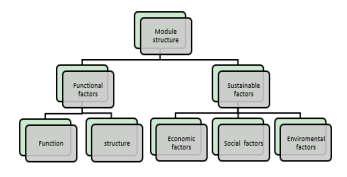
Sustainability is an important consideration in product design. The sustainable design should fully consider the environmental, social, and economic factors of the product. However, the three factors are often conflicting with each other. This paper aims to strike a balance between these factors and achieve sustainable product design through multi-objective optimization. The three influencing factors of sustainability, namely, the environmental factor, social factor and economic factor, were respectively defined as environmental impact, labor time and labor cost. Then, the product to be
Optimized Edge Detection Technique for Brain Tumor Detection in MR Images
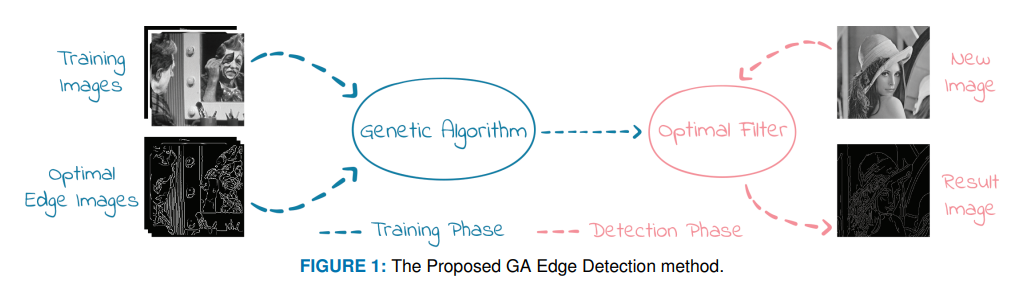
Genetic algorithms (GAs) are intended to look for the optimum solution by eliminating the gene strings with the worst fitness. Hence, this paper proposes an optimized edge detection technique based on a genetic algorithm. A training dataset that consists of simple images and their corresponding optimal edge features is employed to obtain the optimum filter coefficients along with the optimum thresholding algorithm. Qualitative and quantitative performance analyses are investigated based on several well-known metrics. The performance of the proposed genetic algorithm-based cost minimization
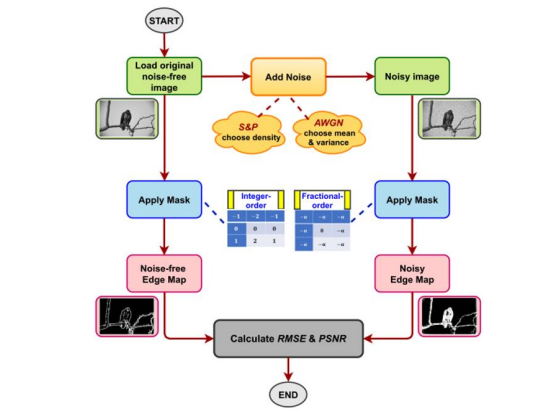
Fractional-order edge detection masks for diabetic retinopathy diagnosis as a case study
Edge detection is one of the main steps in the image processing field, especially in bio-medical imaging, to diagnose a disease or trace its progress. The transfer of medical images makes them more susceptible to quality degradation due to any imposed noise. Hence, the protection of this data against noise is a persistent need. The efficiency of fractional-order filters to detect fine details and their high noise robustness, unlike the integer-order filters, it renders them an attractive solution for biomedical edge detection. In this work, two novel central fractional-order masks are proposed
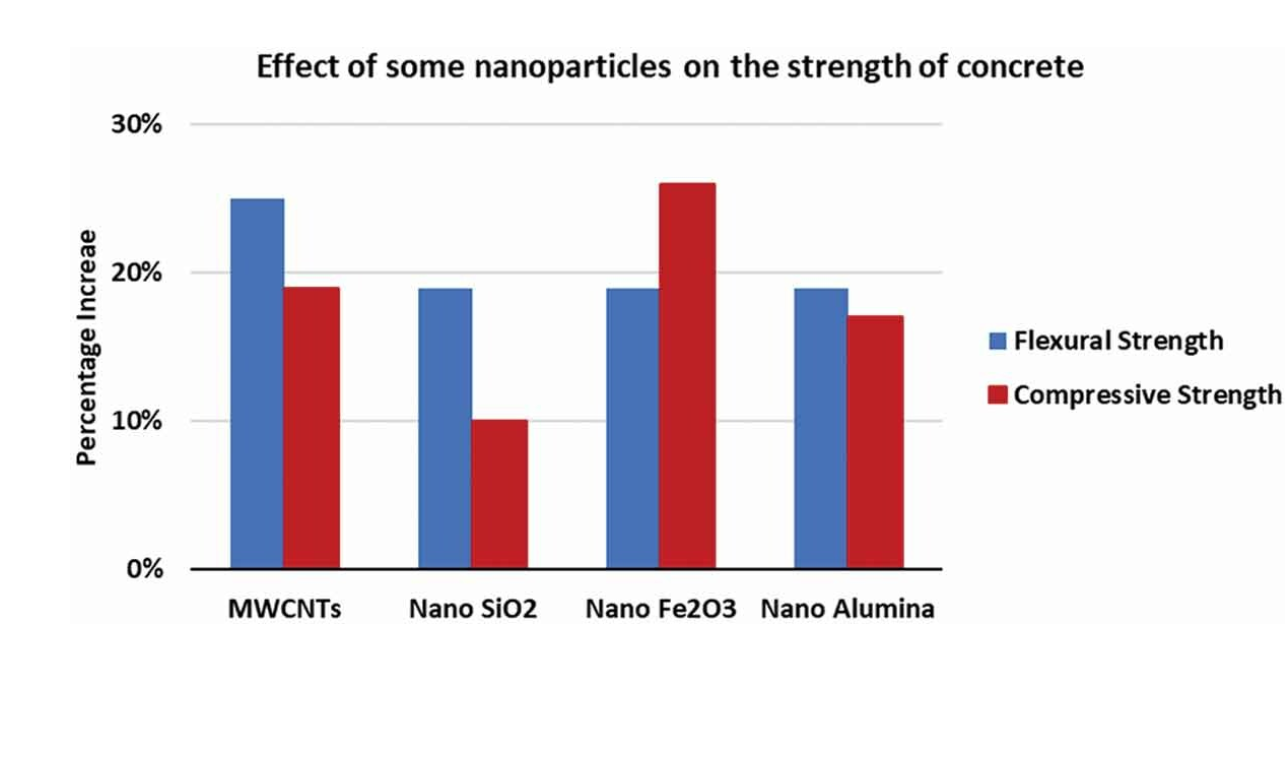
Application of nano waste particles in concrete for sustainable construction: a comparative study
Nano particles contribute as a partial substitute in the production of eco-friendly building materials. This research presents a quantitative assessment of the sustainability effect of partially replacing cement in the green concrete mix with two types of nano-waste particles. The assessment is achieved using two weighing criteria developed by a Sustainable Decision Support System (SDSS) model. This assesses the alternatives using scoring systems based on both the Life Cycle Assessment (LCA) technique and Multi-Criteria decision analysis method. Ten sustainable aspects comprising four
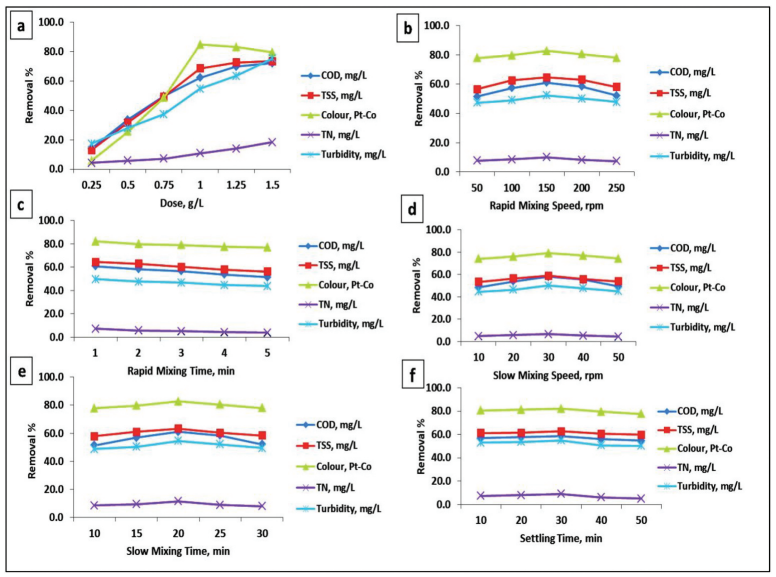
Coagulation/flocculation process for textile mill effluent treatment: experimental and numerical perspectives
This study investigates the feasibility of applying coagulation/flocculation process for real textile wastewater treatment. Batch experiments were performed to detect the optimum performance of four different coagulants; Ferric Sulphate (Fe2(SO4)3), Aluminium Chloride (AlCl3), Aluminium Sulphate (Al2(SO4)3) and Ferric Chloride (FeCl3) at diverse ranges of pH (1–11) on the removal of chemical oxygen demand (COD), total suspended solids (TSS), colour, total nitrogen (TN) and turbidity from real textile wastewater. At pH 9, FeCl3 demonstrated the most effective removal for all studied
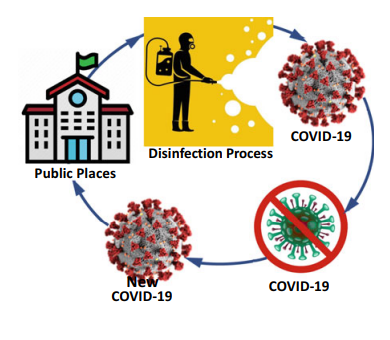
Optimum Scheduling of the Disinfection Process for COVID-19 in Public Places with a Case Study from Egypt, a Novel Discrete Binary Gaining-Sharing Knowledge-Based Metaheuristic Algorithm
The aim of this paper is to introduce an improved strategy for controlling COVID-19 and other pandemic episodes as an environmental disinfection culture for public places. The scheduling aims at achieving the best utilization of the available working day-time hours, which is calculated as the total consumed disinfection times minus the total loosed transportation times. The proposed problem in network optimization identifies a disinfection group who is likely to select a route to reach a subset of predetermined public places to be regularly disinfected with the most utilization of the
Towards Intelligent Web Context-Based Content On-Demand Extraction Using Deep Learning
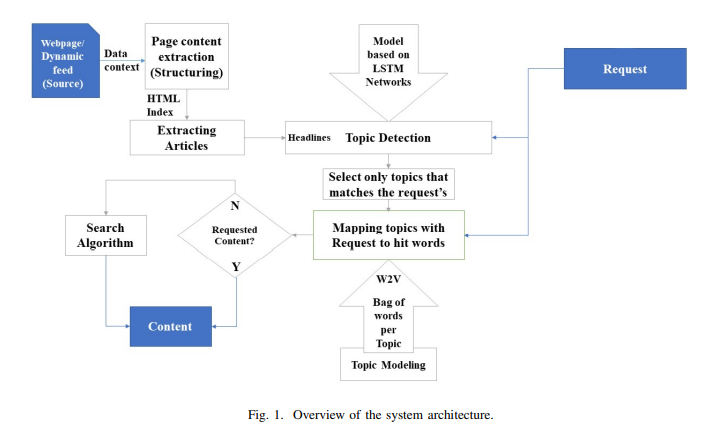
Information extraction and reasoning from massive high-dimensional data at dynamic contexts, is very demanding and yet is very hard to obtain in real-time basis. However, such process capability and efficiency might be affected and limited by the available computational resources and the consequent power consumption. Conventional search mechanisms are often incapable of real-time fetching a predefined content from data source, without concerning the increased number of connected devices that contribute to the same source. In this work, we propose and present a concept for an efficient approach
Transmit and receive cooperative cognition: Protocol design and stability analysis
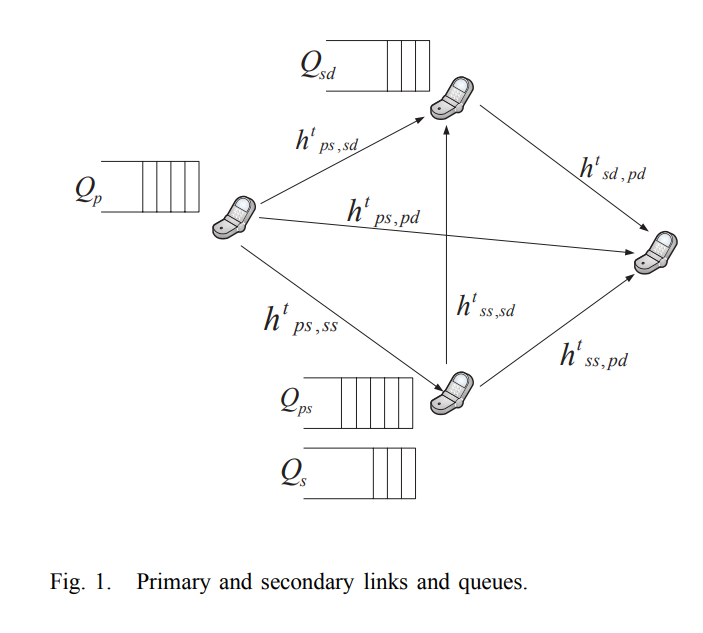
In this paper, we investigate the stability of a cooperative cognitive system. We propose a cooperative secondary transmitter-receiver system (CSTR), where, the secondary transmitter (ST) and the secondary receiver (SR) increase the spectrum availability for the ST packets by relaying the unsuccessfully transmitted packets of the primary transmitter (PT). We assume receiving nodes with multipacket reception capability (MPR). We provide two inner bounds and two outer bounds on the stability region of the considered system. © 2013 ICST - The Institute for Computer Sciences, Social Informatics