
Optimum Scheduling the Electric Distribution Substations with a Case Study: An Integer Gaining-Sharing Knowledge-Based Metaheuristic Algorithm
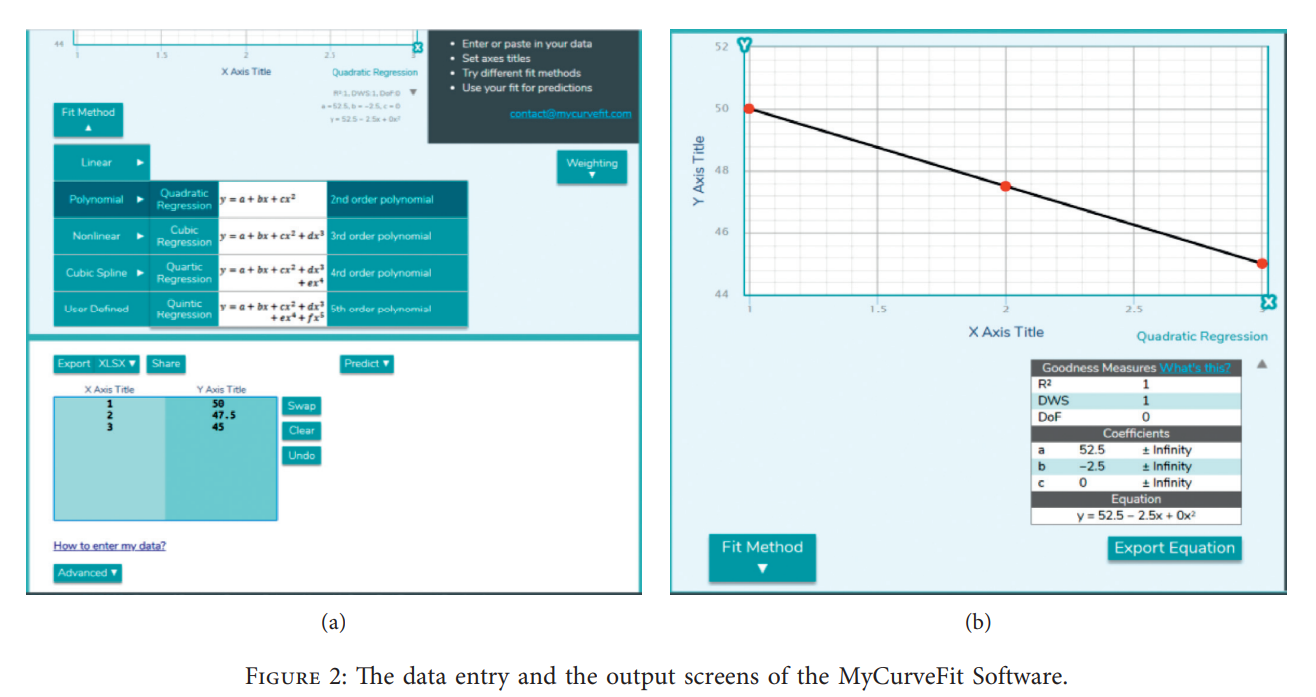
This work is dedicated to the economic scheduling of the required electric stations in the upcoming 10-year long-term plan. The calculation of the required electric stations is carried out by estimating the yearly consumption of electricity over a long-time plan and then determining the required number of stations. The aim is to minimize the total establishing and operating costs of the stations based on a mathematical programming model with nonlinear objective function and integer decision variables. The introduced model is applied for a real practical case study to conclude the number of
Chaotic gaining sharing knowledge-based optimization algorithm: an improved metaheuristic algorithm for feature selection
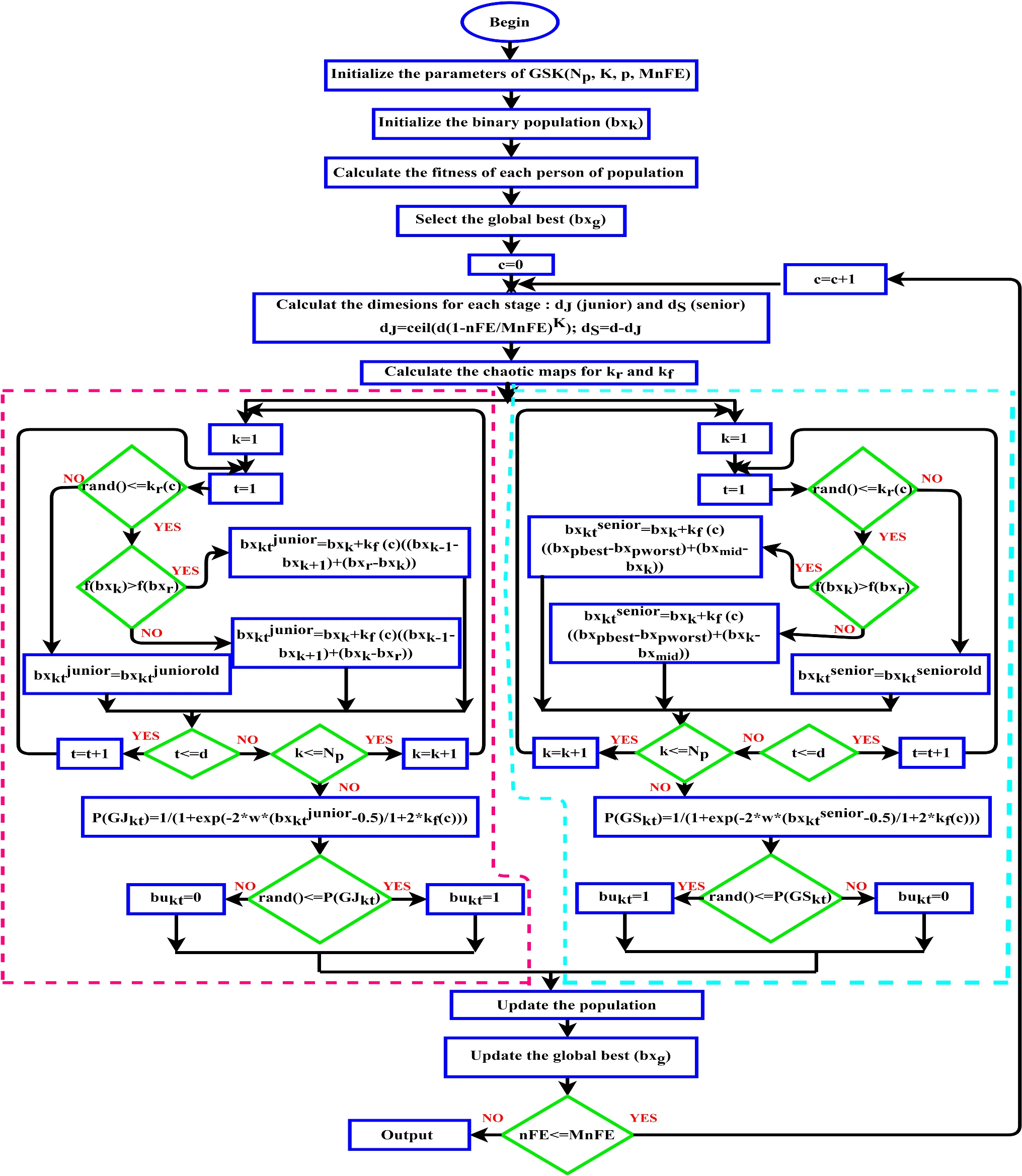
The gaining sharing knowledge based optimization algorithm (GSK) is recently developed metaheuristic algorithm, which is based on how humans acquire and share knowledge during their life-time. This paper investigates a modified version of the GSK algorithm to find the best feature subsets. Firstly, it represents a binary variant of GSK algorithm by employing a probability estimation operator (Bi-GSK) on the two main pillars of GSK algorithm. And then, the chaotic maps are used to enhance the performance of the proposed algorithm. Ten different types of chaotic maps are considered to adapt the
AROMA: Automatic generation of radio maps for localization systems
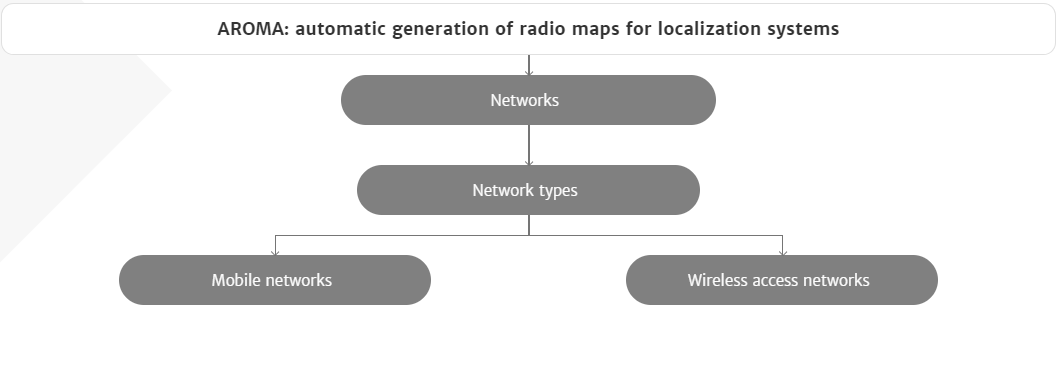
Current methods for building radio maps for wireless localization systems require a tedious, manual and error-prone calibration of the area of interest. Each time the layout of the environment is changed or different hardware is used, the whole process of location fingerprinting and constructing the radio map has to be repeated. The process gets more complicated in the case of localizing multiple entities in a device-free scenario, since the radio map needs to take all possible combinations of the location of the entities into account. In this demo, we present a novel system (AROMA) that is
Transmission power adaptation for cognitive radios
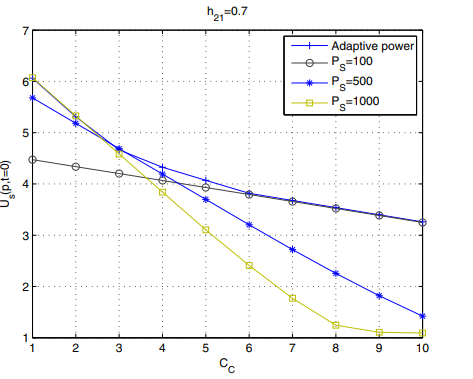
In cognitive radio (CR) networks, determining the optimal transmission power for the secondary users (SU) is crucial to achieving the goal of maximizing the secondary throughput while protecting the primary users (PU) from service disruption and interference. In this paper, we propose an adaptive transmission power scheme for cognitive terminals opportunistically accessing a primary channel. The PU operates over the channel in an unslotted manner switching activity at random times. The secondary transmitter (STx) adapts its transmission power according to its belief regarding the PU's state of
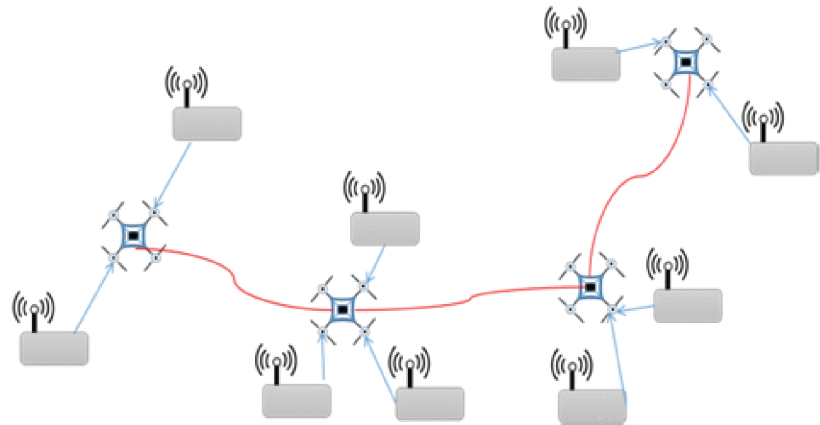
Swarm intelligence application to UAV aided IoT data acquisition deployment optimization
It is feasible and safe to use unmanned aerial vehicle (UAV) as the data collection platform of the Internet of things (IoT). In order to save the energy loss of the platform and make the UAV perform the collection work effectively, it is necessary to optimize the deployment of UAV. The objective problem is to minimize the sum of the lost energy of UAV and the loss of data transmission of Internet of things devices. The key to solving the problem is to calculate the location of the docking points and the number of docking points when the UAV is working to collect data. This paper proposes a
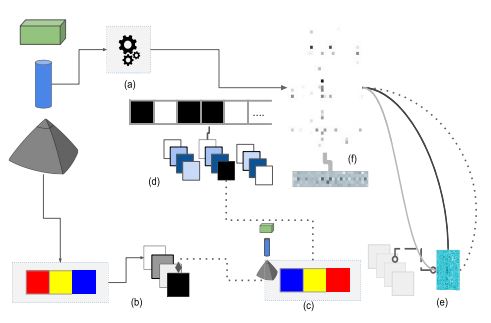
Neural Knapsack: A Neural Network Based Solver for the Knapsack Problem
This paper introduces a heuristic solver based on neural networks and deep learning for the knapsack problem. The solver is inspired by mechanisms and strategies used by both algorithmic solvers and humans. The neural model of the solver is based on introducing several biases in the architecture. We introduce a stored memory of vectors that holds up items representations and their relationship to the capacity of the knapsack and a module that allows the solver to access all the previous outputs it generated. The solver is trained and tested on synthetic datasets that represent a variety of
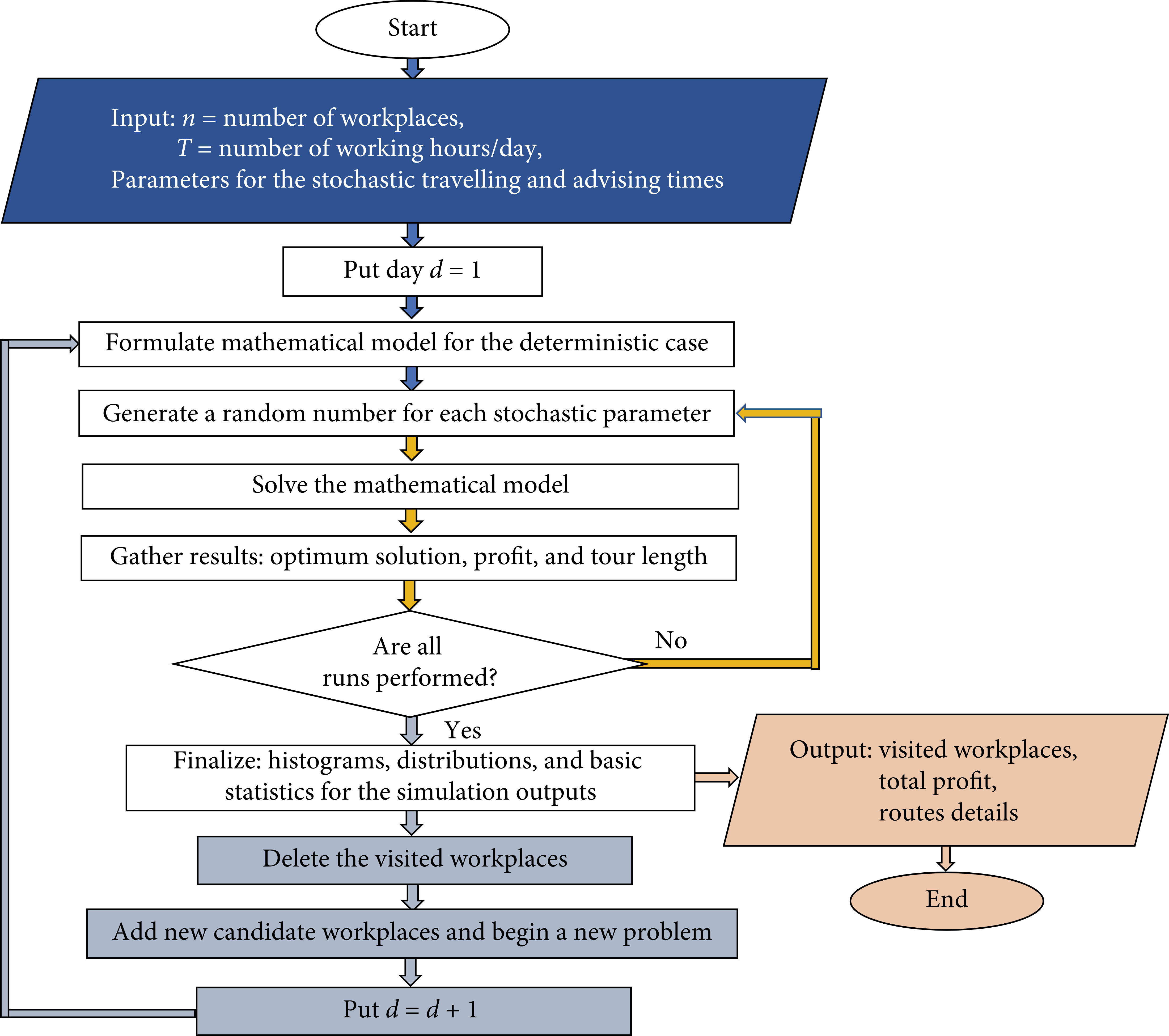
Stochastic travelling advisor problem simulation with a case study: A novel binary gaining-sharing knowledge-based optimization algorithm
This article proposes a new problem which is called the Stochastic Travelling Advisor Problem (STAP) in network optimization, and it is defined for an advisory group who wants to choose a subset of candidate workplaces comprising the most profitable route within the time limit of day working hours. A nonlinear binary mathematical model is formulated and a real application case study in the occupational health and safety field is presented. The problem has a stochastic nature in travelling and advising times since the deterministic models are not appropriate for such real-life problems. The
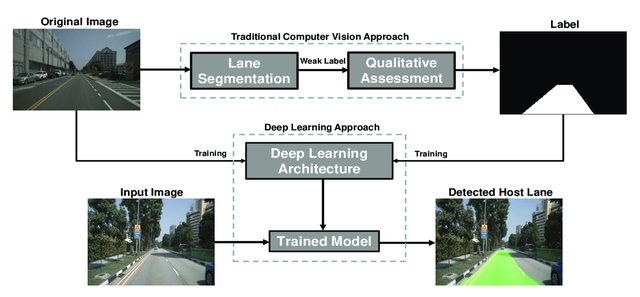
A Deep Learning-Based Benchmarking Framework for Lane Segmentation in the Complex and Dynamic Road Scenes
Automatic lane detection is a classical task in autonomous vehicles that traditional computer vision techniques can perform. However, such techniques lack reliability for achieving high accuracy while maintaining adequate time complexity in the context of real-time detection in complex and dynamic road scenes. Deep neural networks have proved their ability to achieve competing accuracy and time complexity while training them on manually labeled data. Yet, the unavailability of segmentation masks for host lanes in harsh road environments hinders fully supervised methods’ operability on such a
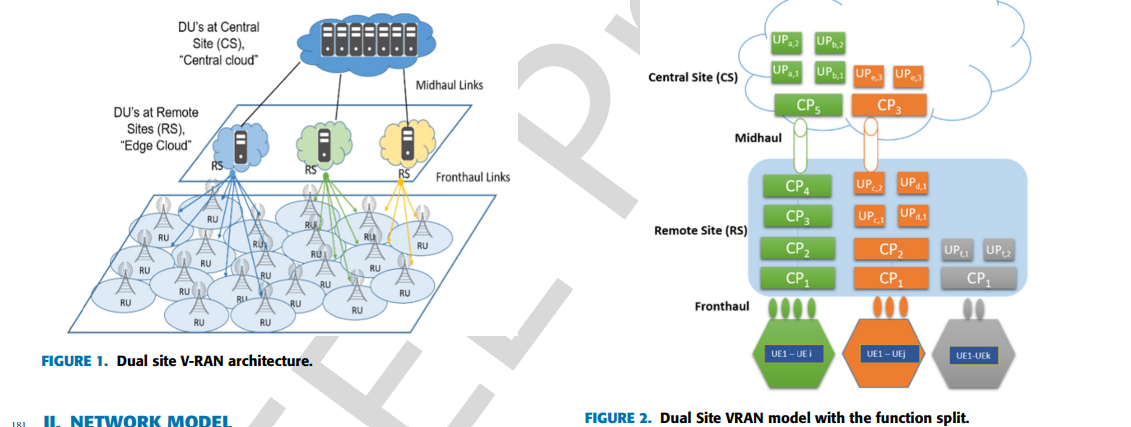
Optimum functional splits for optimizing energy consumption in V-RAn
A virtualized radio access network (V-RAN) is considered one of the key research points in the development of 5G and the interception of machine learning algorithms in the Telecom industry. Recent technological advancements in Network Function Virtualization (NFV) and Software Defined Radio (SDR) are the main blocks towards V-RAN that have enabled the virtualization of dual-site processing instead of all BBU processing as in the traditional RAN. As a result, several types of research discussed the trade-off between power and bandwidth consumption in V-RAN. Processing at remote locations
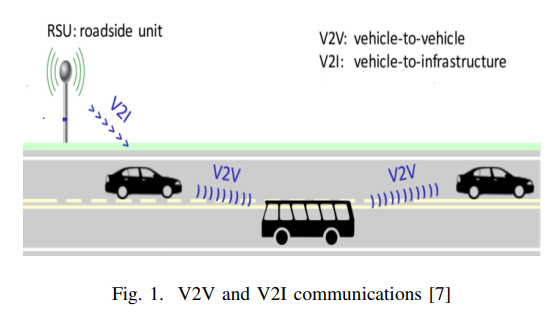
Collision Probability Computation for Road Intersections Based on Vehicle to Infrastructure Communication
In recent years, many probability models proposed to calculate the collision probability for each vehicle and those models used in collision avoidance algorithms and intersection management algorithms. In this paper, we introduce a method to calculate the collision probability of vehicles at an urban intersection. The proposed model uses the current position, speed, acceleration, and turning direction then each vehicle shares its required information to the roadside unit (RSU) via the Vehicle to Infrastructures (V2I). RSU can predict each vehicle's path in intersections by using the received