Internet of Things security framework
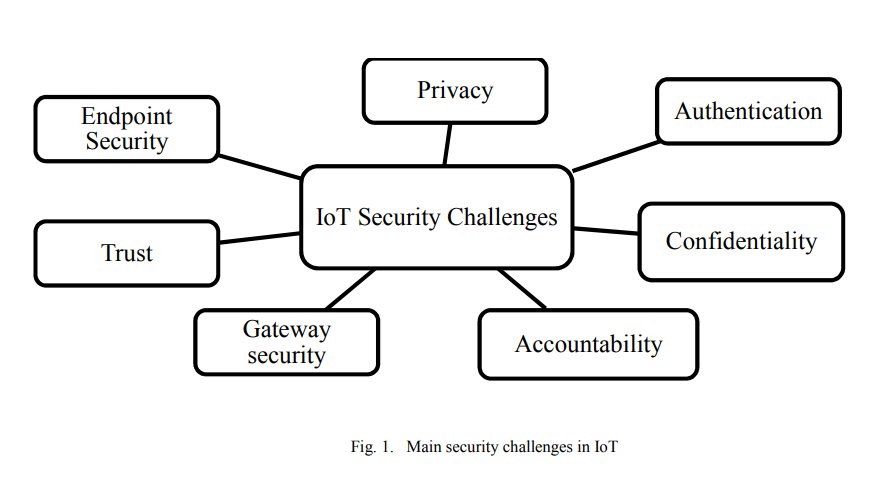
For the past decade, Internet of Things (IoT) had an important role in our lives. It connects a large number of embedded devices. These devices fulfill very difficult and complicated tasks, which facilitate our work. Till now the security of IoT faces many challenges such as privacy, authentication, confidentiality, trust, middleware security, mobile security and policy enforcement. In order to provide a secure environment for IoT, this paper proposes a framework for IoT devices. © 2017 IEEE.
Janitor, certificate and jury (JCJ): Trust scheme for wireless ad-hoc networks
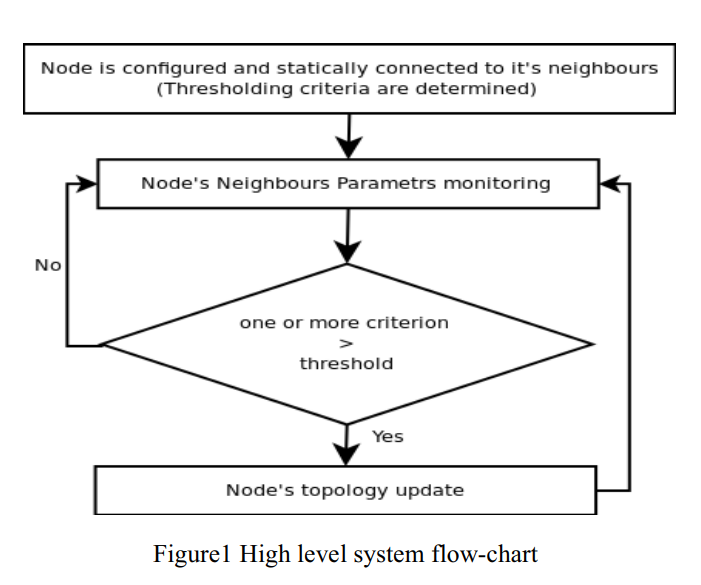
Ad hoc networks are peer mobile nodes that self configure to form a network. In these types of networks there is no routing infrastructure, and usually nodes have limited resources. This imposes a serious problem due to some nodes' selfishness and willingness to preserve their resources. Many approaches have been proposed to deal with this problem and mitigate the selfishness; amongst these approaches are reputation systems. This paper proposes a reputation system scheme that helps isolating misbehaving nodes and decreasing their ability to launch an attack on the network. The idea of this
Fuzzy gaussian classifier for combining multiple learners
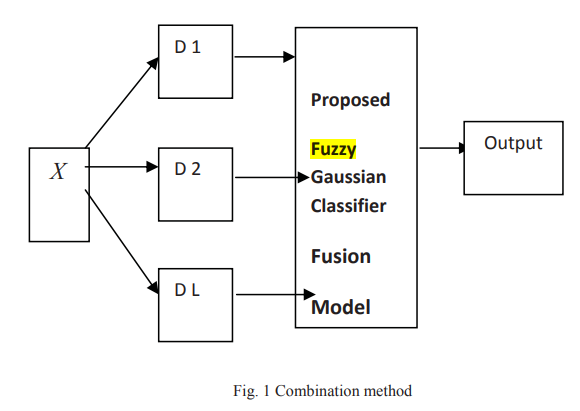
In the field of pattern recognition multiple classifier systems based on the combination of outputs from different classifiers have been proposed as a method of high performance classification systems. The objective of this work is to develop a fuzzy Gaussian classifier for combining multiple learners, we use a fuzzy Gaussian model to combine the outputs obtained from K-nearest neighbor classifier (KNN), Fuzzy K-nearest neighbor classifier and Multi-layer Perceptron (MLP) and then compare the results with Fuzzy Integral, Decision Templates, Weighted Majority, Majority Naïve Bayes, Maximum
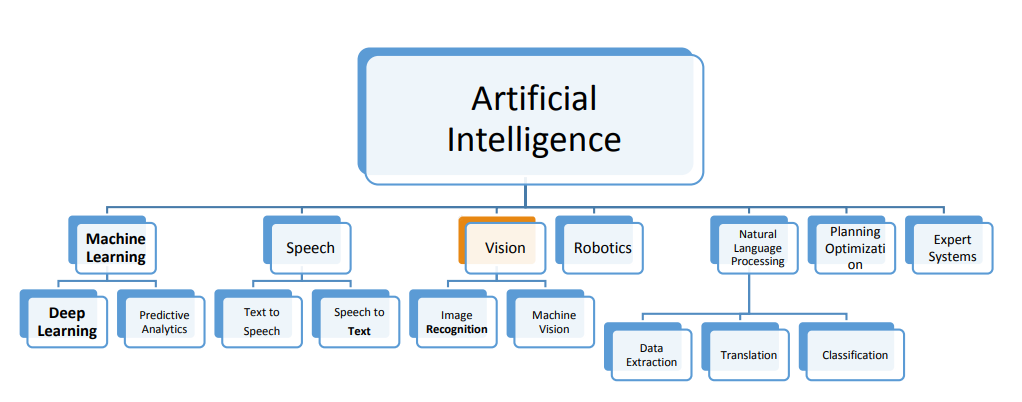
Artificial intelligence for retail industry in Egypt: Challenges and opportunities
In the era of digital transformation, a mass disruption in the global industries have been detected. Big data, the Internet of Things (IoT) and Artificial Intelligence (AI) are just examples of technologies that are holding such digital disruptive power. On the other hand, retailing is a high-intensity competition and disruptive industry driving the global economy and the second largest globally in employment after the agriculture. AI has large potential to contribute to global economic activity and the biggest sector gains would be in retail. AI is the engine that is poised to drive the
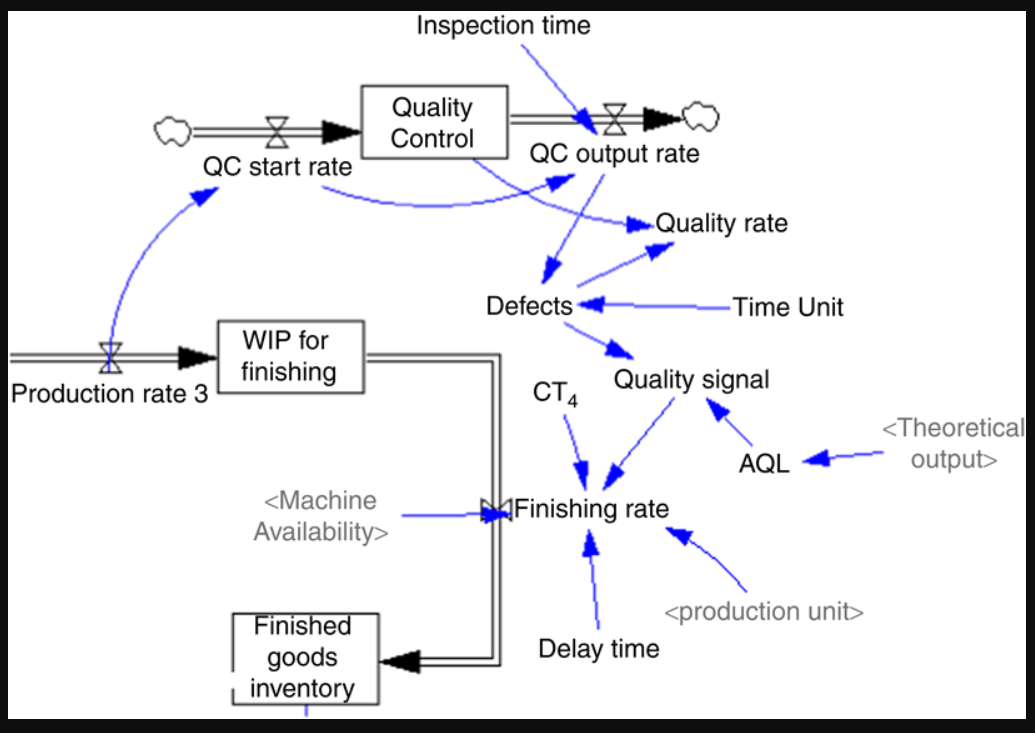
Assessing leanness level with demand dynamics in a multi-stage production system
Purpose - The purpose of this paper is to present a dynamic model to measure the degree of system's leanness under dynamic demand conditions using a novel integrated metric. Design/methodology/approach - The multi-stage production system model is based on a system dynamics approach. The leanness level is measured using a new developed integrated metric that combines efficiency,WIP performance as well as service level. The analysis includes design of experiment technique at the initial analysis to examine the most significant parameters impacting the leanness score and then followed by
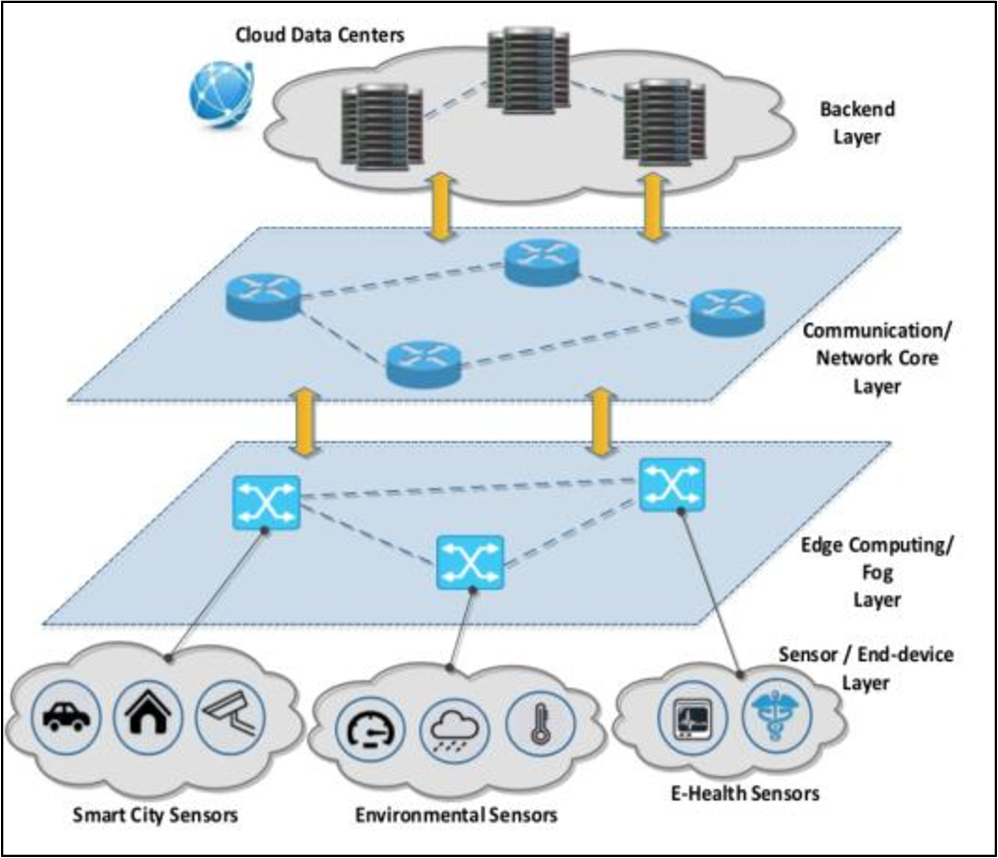
IoT Modes of Operations with Different Security Key Management Techniques: A Survey
The internet of things (IoT) has provided a promising opportunity to build powerful systems and applications. Security is the main concern in IoT applications due to the privacy of exchanged data using limited resources of IoT devices (sensors/actuators). In this paper, we present a classification of IoT modes of operation based on the distribution of IoT devices, connectivity to the internet, and the typical field of application. It has been found that the majority of IoT services can be classified into one of four IoT modes: Gateway, device to device, collaborative, and centralized. The
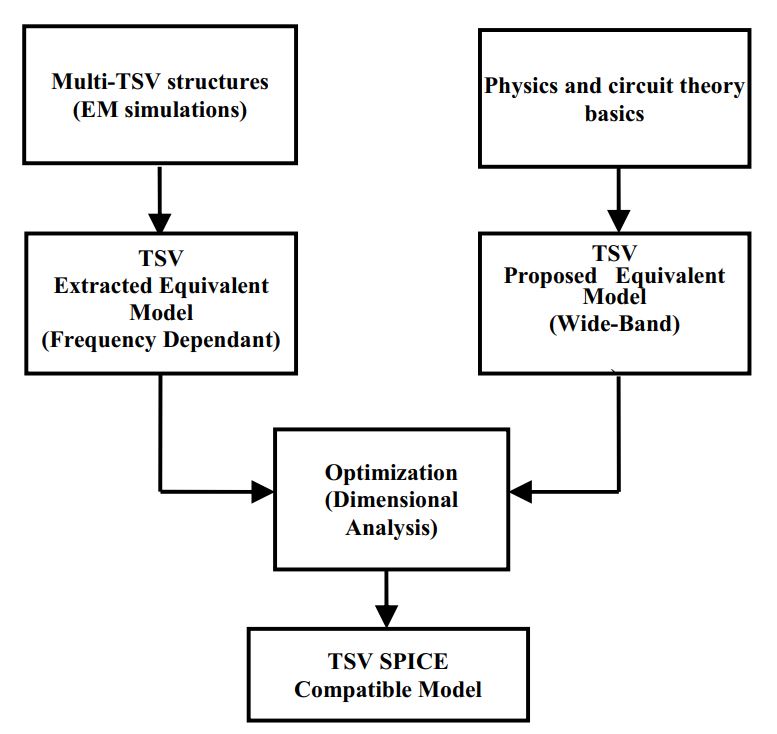
Equivalent lumped element models for various n-port through silicon vias networks
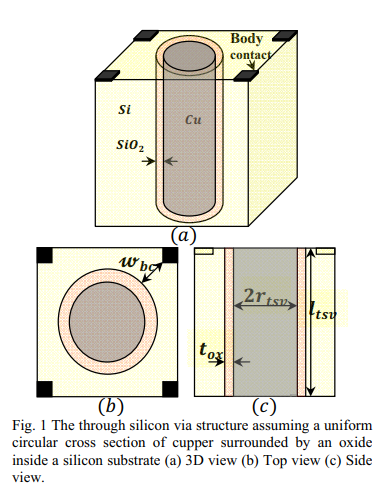
This paper proposes an equivalent lumped element model for various multi-TSV arrangements and introduces closed form expressions for the capacitive, resistive, and inductive coupling between those arrangements. The closed form expressions are in terms of physical dimensions and material properties and are driven based on the dimensional analysis method. The model's compactness and compatibility with SPICE simulators allows the electrical modeling of various TSV arrangements without the need for computationally expensive field-solvers and the fast investigation of a TSV impact on a 3-D circuit
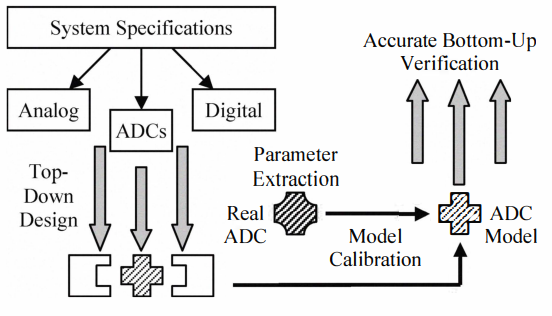
Behavioral modeling of the static transfer function of ADCs using INL measurements
In this paper, we present a modeling approach for analog-to-digital converters (ADCs) based on modeling the static transfer function using integral nonlinearity (INL) measurements. The methodology relies on applying a Fast Fourier Transform (FFT) test to the output of a real ADC circuit and extracting the significant harmonics. These are used in a behavioral functional model to approximate the INL using a polynomial function. The resulting model is independent of the ADC type or structure, and is suitable for bottom-up system verification. We compare the performance of the new model with other
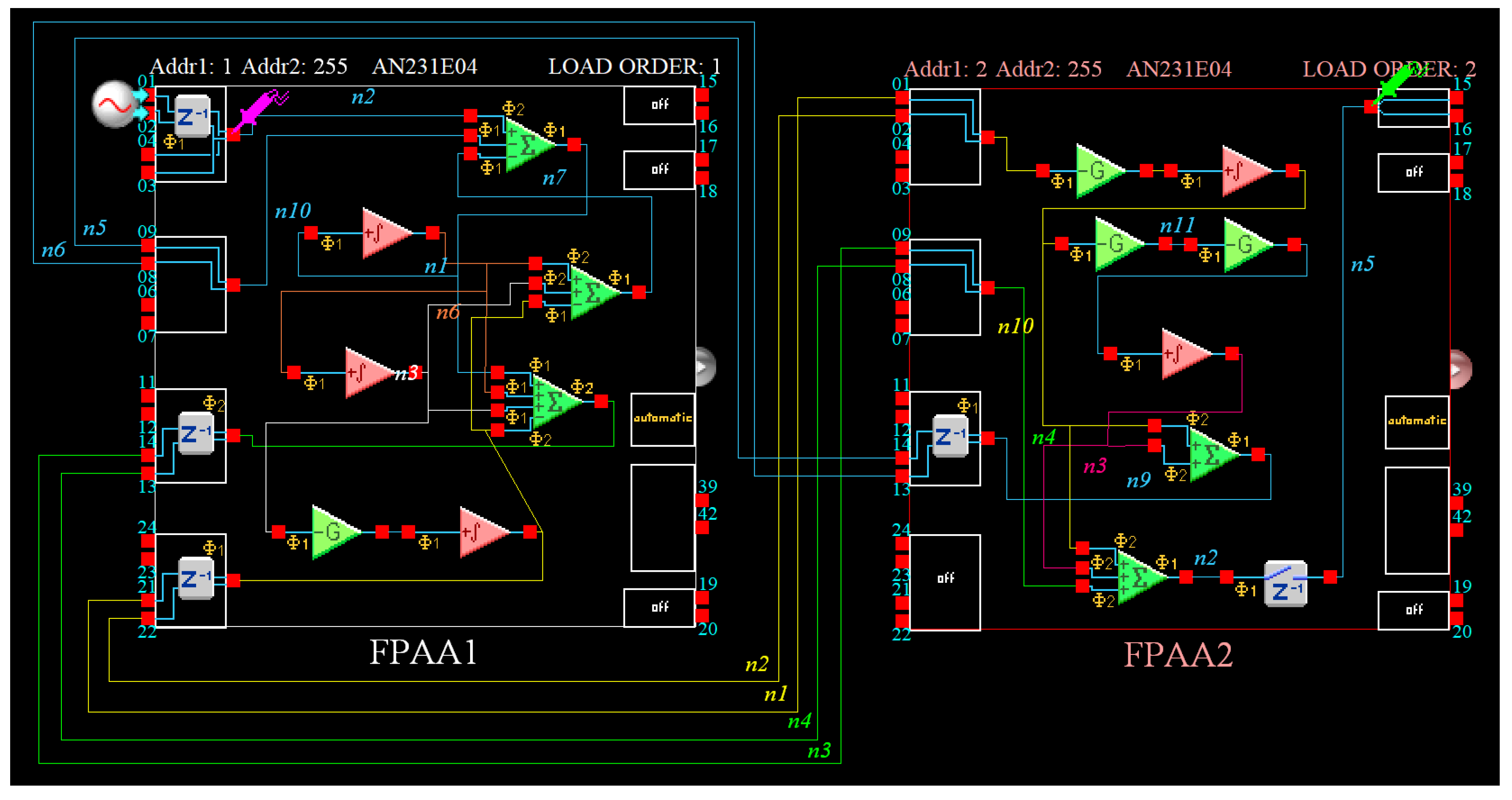
FPAA-based realization of filters with fractional laplace operators of different orders
A simple and direct procedure for implementing fractional-order filters with transfer functions that contain Laplace operators of different fractional orders is presented in this work. Based on a general fractional-order transfer function that describes fractional-order low-pass, high-pass, band-pass, band-stop and all-pass filters, the introduced concept deals with the consideration of this function as a whole, with its approximation being performed using a curve-fitting-based technique. Compared to the conventional procedure, where each fractional-order Laplace operator of the transfer