
Sustainable Evaluation of Using Nano Zero-Valent Iron and Activated Carbon for Real Textile Effluent Remediation
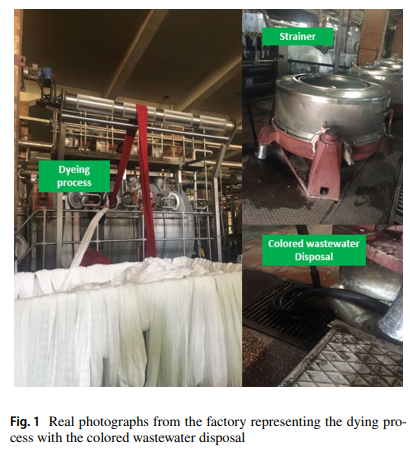
In this study, the performance of using two different adsorbents, nano-zero-valent iron (nZVI) and activated carbon (AC), was examined for the treatment of real textile effluents. The porous structure and chemical composition of the synthesized nZVI were detected via X-ray diffraction, scanning electron microscopy and EDX analysis. Batch adsorption studies were conducted to investigate the optimal operating conditions including pH, adsorbent dose, contact time and stirring rate for the removal of COD, TSS and color from real textile wastewater. At same optimal operating conditions, pH 6, dose
Joint relay assignment and adaptive modulation for energy-efficient cellular networks
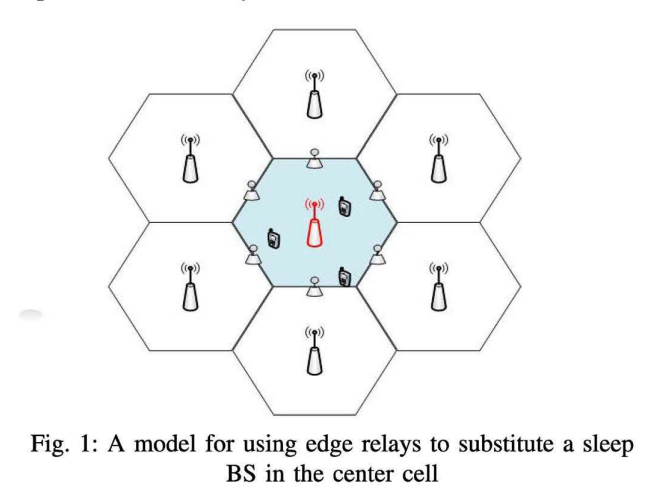
Energy efficient operation of cellular systems becomes a core design goal for economic and environment-friendly network operation. Several studies have shown that the energy consumed in base stations represents 60-80% of the energy consumption in cellular networks. In this paper, we develop an optimization framework that exploits several energy efficient techniques including switching power modes of base stations, Adaptive Modulation (AM), and the use of relays. Our main objective is to reduce both, transmitted and circuit power, subject to satisfying the quality of service constraints. To
Towards Intelligent Web Context-Based Content On-Demand Extraction Using Deep Learning
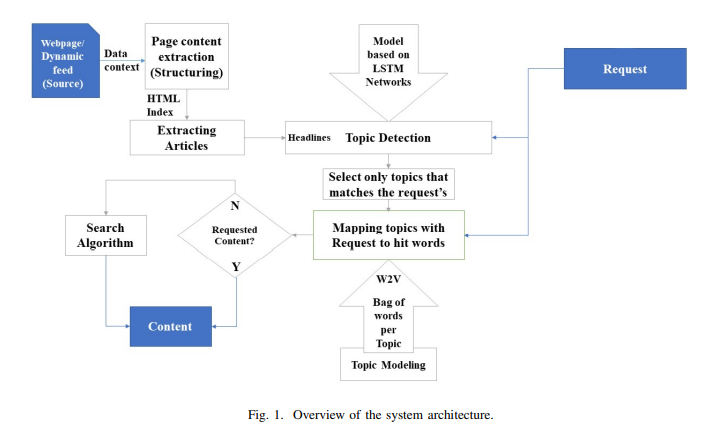
Information extraction and reasoning from massive high-dimensional data at dynamic contexts, is very demanding and yet is very hard to obtain in real-time basis. However, such process capability and efficiency might be affected and limited by the available computational resources and the consequent power consumption. Conventional search mechanisms are often incapable of real-time fetching a predefined content from data source, without concerning the increased number of connected devices that contribute to the same source. In this work, we propose and present a concept for an efficient approach
SWIPT Using Hybrid ARQ over Time Varying Channels
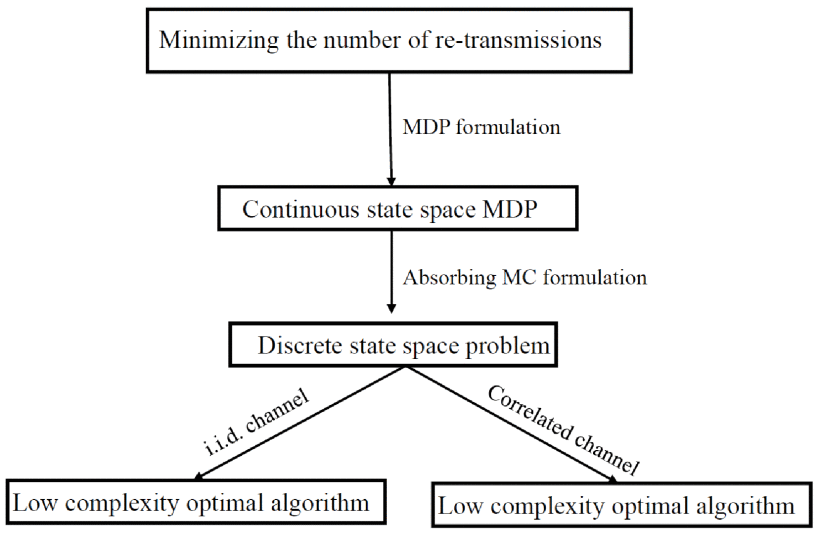
We consider a class of wireless powered devices employing hybrid automatic repeat request to ensure reliable end-to-end communications over a two-state time-varying channel. A receiver, with no power source, relies on the energy transferred by a simultaneous wireless information and power transfer enabled transmitter to receive and decode information. Under the two-state channel model, information is received at two different rates while it is only possible to harvest energy in one of the states. The receiver aims to decode its messages with minimum expected number of re-transmissions. Dynamic
Network Coded Cooperation Receiver with Analog XOR Mapping for Enhanced BER
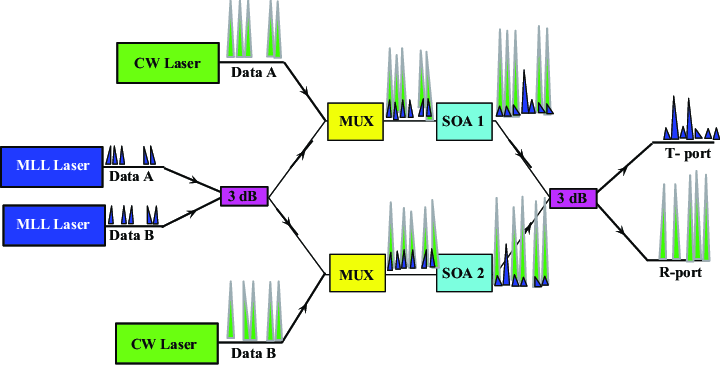
In this paper, we propose a novel physical layer decoding technique for Device-to-Device Network Coded Cooperation (NCC) receivers in the Two Way Relay Channel (TWRC) scenario. The proposed technique is efficiently applicable either when Channel State Information (CSI) are available at the receiver or not. It first employs XOR arithmetic analog mapping to extract a distorted version of the intended signal from the network-coded signal received from the relay. The obtained signal is then combined with the direct signal received from the source, resulting in a higher SNR version of the intended
Multiuser MIMO relaying under quality of service constraints
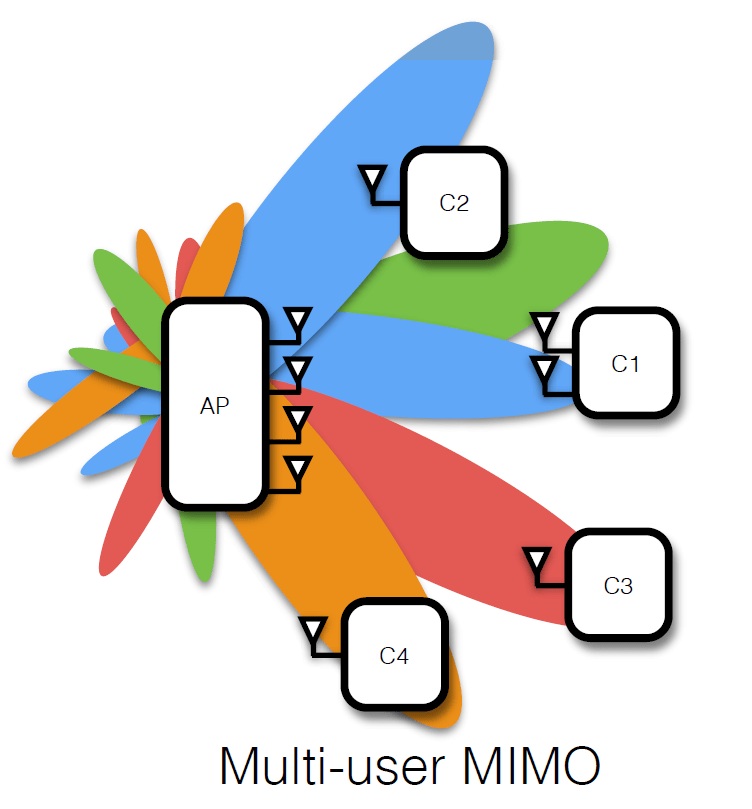
We consider a wireless communication scenario with K source-destination pairs communicating through several half-duplex amplify-and-forward relays. We design the relay beamforming matrices by minimizing the total power transmitted from all the relays subject to quality of service constraints on the received signal to interference-plus-noise ratio at each destination node. We propose a novel method for solving the resulting nonconvex optimization problem in which the problem is decomposed into a group of second-order cone programs (SOCPs) parameterized by K real parameters. Grid search or
New achievable secrecy rate regions for the two way wiretap channel
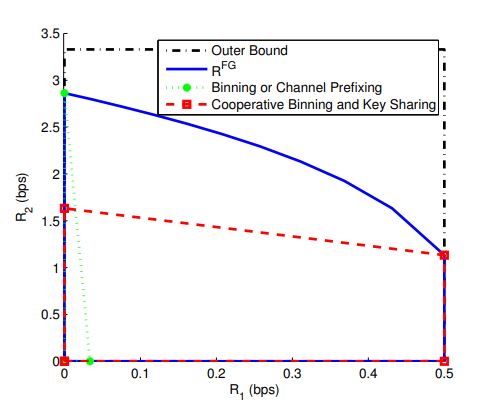
This work develops new achievable rate regions for the two way wiretap channel. In our setup, Alice and Bob wish to exchange messages securely in the presence of a passive eavesdropper Eve. In the full-duplex scenario, our achievability argument relies on allowing the two users to jointly optimize their channel prefixing distributions, such that the new channel conditions are favorable compared to that of Eve. Random binning and private key sharing over the channel are then used to exploit the secrecy advantage available in the equivalent cascade channel and to distribute the available secrecy
Swarm intelligence application to UAV aided IoT data acquisition deployment optimization
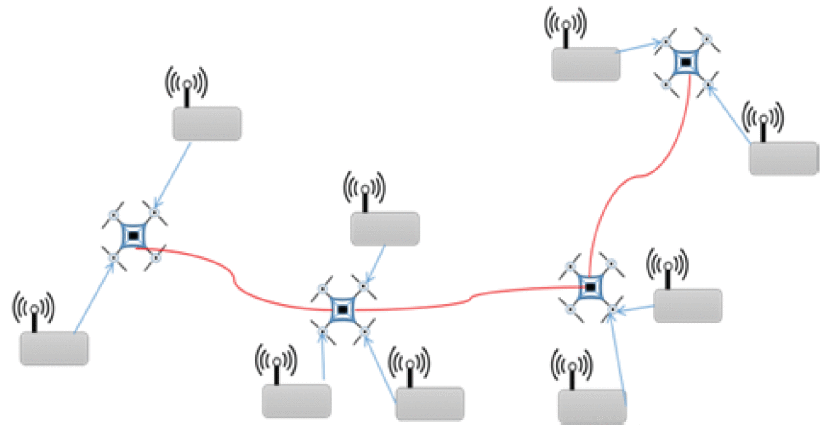
It is feasible and safe to use unmanned aerial vehicle (UAV) as the data collection platform of the Internet of things (IoT). In order to save the energy loss of the platform and make the UAV perform the collection work effectively, it is necessary to optimize the deployment of UAV. The objective problem is to minimize the sum of the lost energy of UAV and the loss of data transmission of Internet of things devices. The key to solving the problem is to calculate the location of the docking points and the number of docking points when the UAV is working to collect data. This paper proposes a
Neural Knapsack: A Neural Network Based Solver for the Knapsack Problem
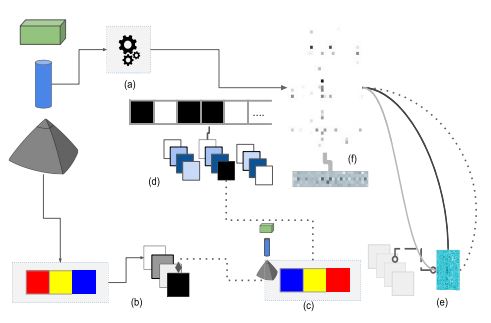
This paper introduces a heuristic solver based on neural networks and deep learning for the knapsack problem. The solver is inspired by mechanisms and strategies used by both algorithmic solvers and humans. The neural model of the solver is based on introducing several biases in the architecture. We introduce a stored memory of vectors that holds up items representations and their relationship to the capacity of the knapsack and a module that allows the solver to access all the previous outputs it generated. The solver is trained and tested on synthetic datasets that represent a variety of
Stochastic travelling advisor problem simulation with a case study: A novel binary gaining-sharing knowledge-based optimization algorithm
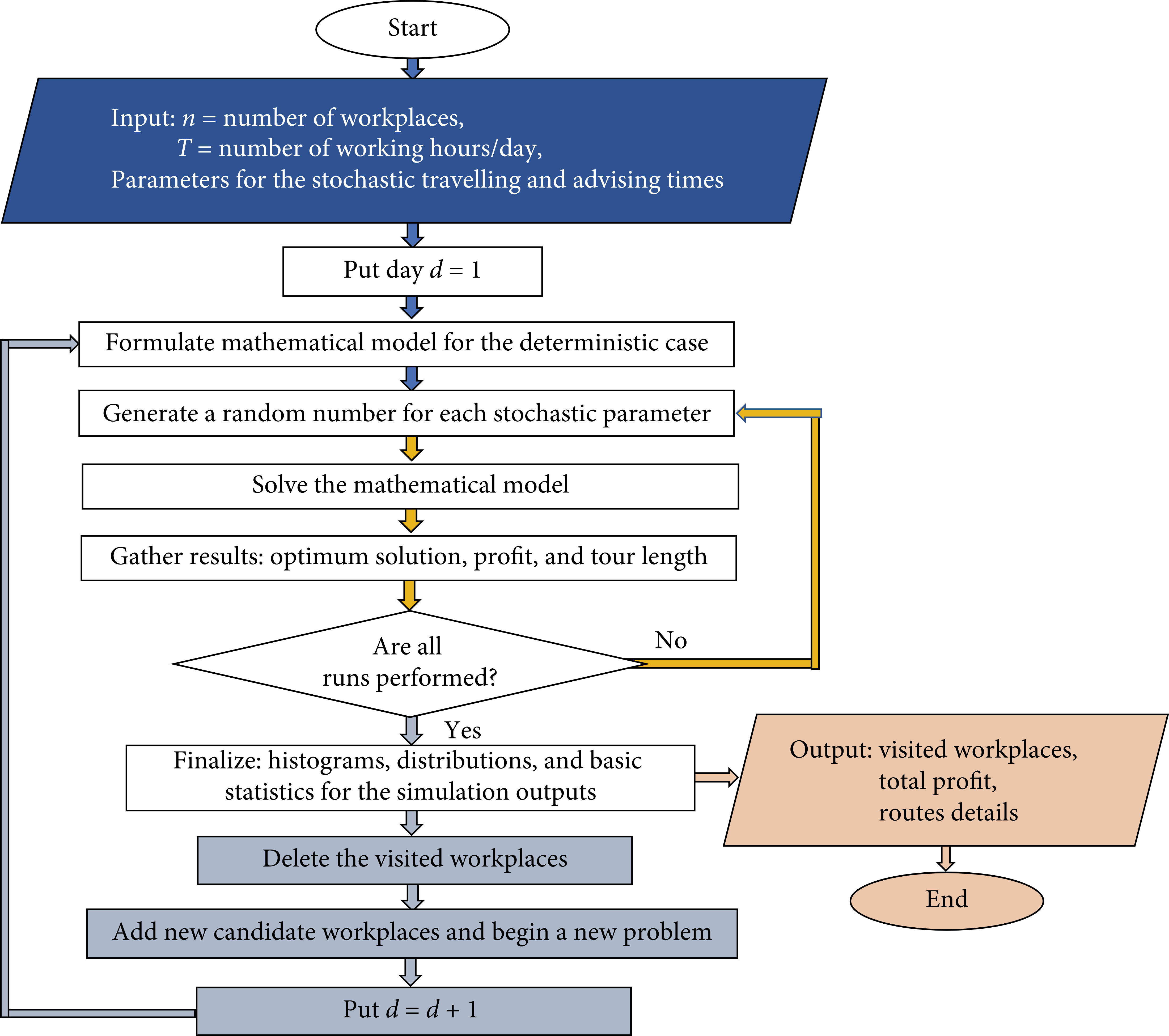
This article proposes a new problem which is called the Stochastic Travelling Advisor Problem (STAP) in network optimization, and it is defined for an advisory group who wants to choose a subset of candidate workplaces comprising the most profitable route within the time limit of day working hours. A nonlinear binary mathematical model is formulated and a real application case study in the occupational health and safety field is presented. The problem has a stochastic nature in travelling and advising times since the deterministic models are not appropriate for such real-life problems. The