
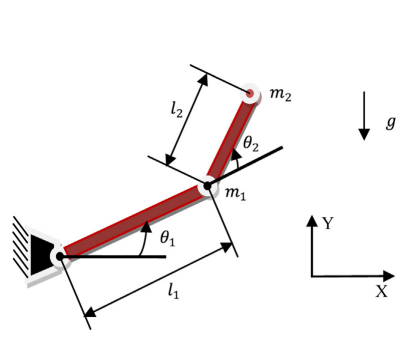
Design of fractional order fuzzy sliding mode controller for nonlinear complex systems
Controlling a nonlinear, time-varying, uncertain, coupled multiinput-multioutput (MIMO) complex system is always a challenging task for control engineers. A linear PID controller is not able to control effectively these complex systems and a robust adaptive controller is needed for perfect control. In this chapter, a fractional order fuzzy sliding mode proportional derivative (FOFSMCPD) controller is presented to control a two-link planar rigid robotic manipulator system. Literature reveals that sliding mode controllers (SMC) have the serious issue of fast oscillations, called chattering, in
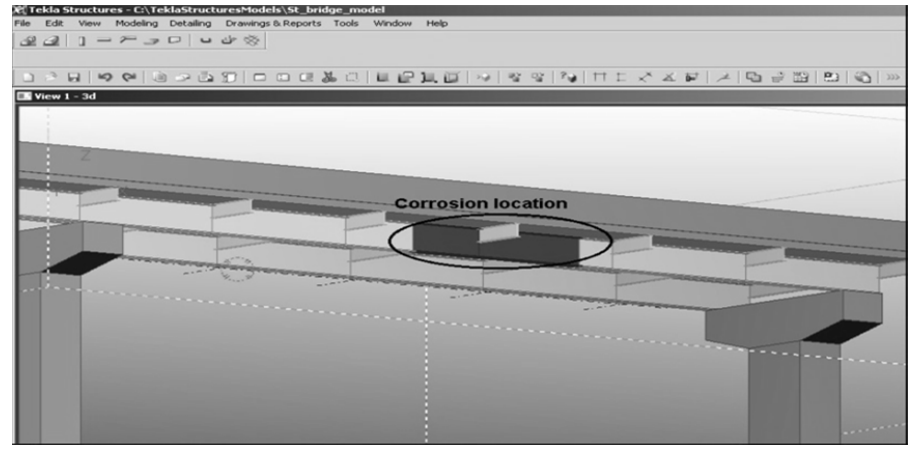
Bridge information modeling in sustainable bridge management
Bridge Management Systems (BMS) play a crucial role in maintenance and rehabilitation decisions related to bridges. This paper presents using Bridge Information Modeling (BrIM) framework that adopts BMS features including; databases, inspection module, and condition assessment module. The proposed BrIM framework creates a database of bridges' components and generates inspection spreadsheets. It also visualizes bridge components considering the information stored in the database and inspection spreadsheets, using Structured Query Language (SQL) statements. The paper presents the integration of
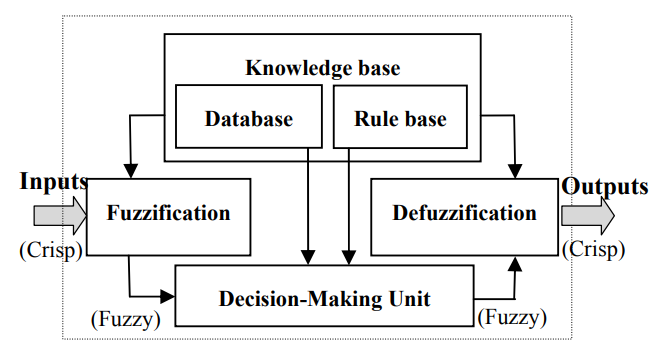
Conceptual cost estimation of pump stations projects using fuzzy clustering
Conceptual cost estimates, are prepared at the very early stages of a project, and generally before the construction drawings and specifications are available. At this stage, cost estimates are needed by the owner, contractor, designer, or funding agencies for determination of the feasibility of a project, financial evaluation of a number of alternative projects, or establishment of an initial budget. Traditional approaches rely heavily on experienced engineers. This paper presents a method using fuzzy clustering technique for pump station projects cost estimation. The proposed conceptual cost
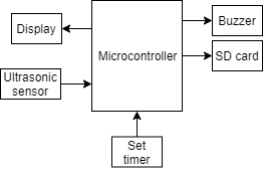
Simulation of vitiligo therapy equipment
Vitiligo is a skin disorder caused by a lack of melanin pigment in the skin, which causes white patches on certain parts of the skin because this melanin pigment is not able to produce the skin color. Previously, one of the treatments for vitiligo was using a UVB lamp with a 311 nm wavelength that could not yet be adjusted to dim the lights as safety when conducting therapy. Therefore, the research aims to design a simulation of the vitiligo therapy device equipped with a timer LED lamp, a safety of lighting, and the data storage. The data are stored in the SD Card to make it easier for
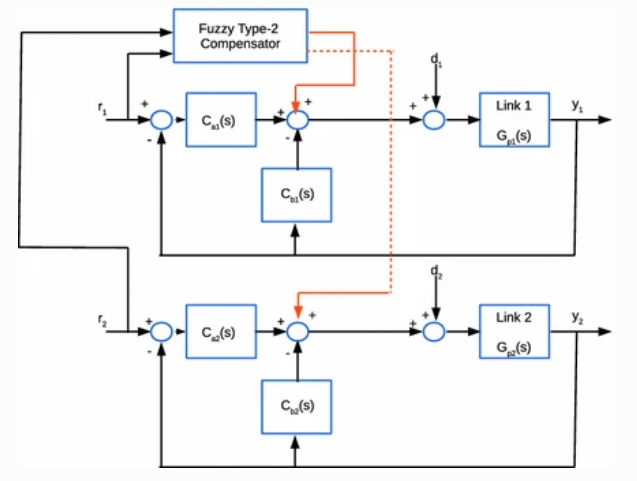
Fractional Order Two Degree of Freedom PID Controller for a Robotic Manipulator with a Fuzzy Type-2 Compensator
In this paper a novel strategy for the position control and trajectory tracking of robotic manipulators is proposed. This strategy consists of an independent two degree of freedom PID controller for a two links robotic arm. Due to the capability of two degree of freedom PID controllers to deal with disturbances, each link is controlled independently considering that the disturbance does not affect the system performance due to the robustness of the closed loop system. Then, a fuzzy type-2 centralized compensator is implemented to drive the orientation variables with the desired trajectory in
Agent-based simulation of urban infrastructure asset management activities
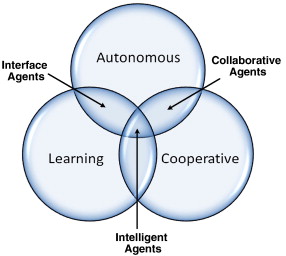
This paper presents a case for adopting agent-based modeling (ABM) as a framework for representing the complex interactions that occur within the context of urban infrastructure management. A generic ABM is proposed with four key agents namely; assets, users, operators and politicians. For each agent a set of generic attributes, actions and behaviors are defined. A detailed behavioral model is adapted from the service quality domain to represent customer perceptions and actions related to infrastructure level of service. An illustrative example of 20 assets and 50 user agents is simulated to
Piezothermoelasticity in an infinite slab within the dual-phase-lag model
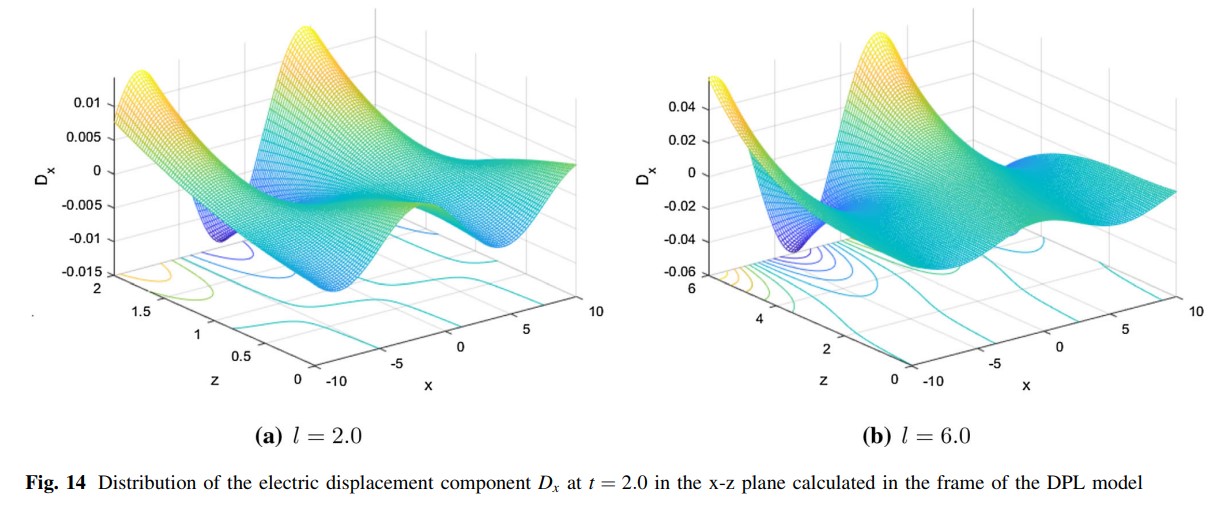
The system of equations of the generalized piezothermoelasticity in anisotropic medium with dual-phase-lag model is established. The exact expressions for displacement components, the temperature, stress components, electric potential and electric displacements are given in the physical domain and illustrated graphically. These expressions are calculated numerically for the problem. Comparisons are made with the results predicted by Lord–Shulman theory and dual-phase-lag model. It is shown that the results from both theories are close to each other for thin slabs, while they differ
Numerical solution to a 2D-problem of piezo-thermoelasticity in a quarter-space within the dual-phase-lag model
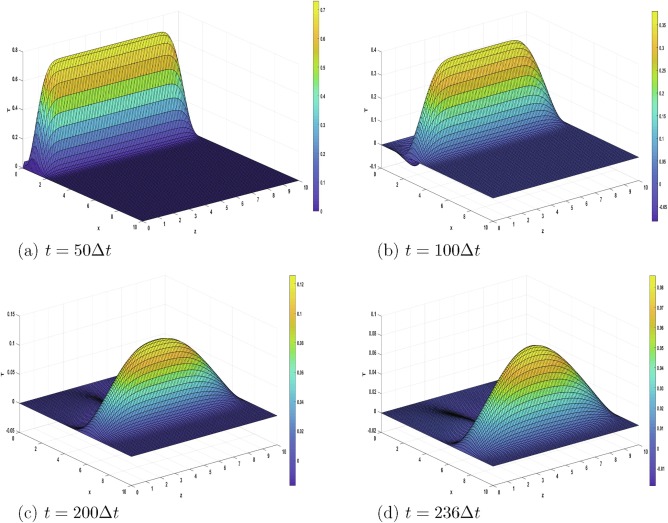
We present a numerical solution by finite differences to a linear, plane, initial-boundary-value problem of thermo-piezoelasticity in a quarter-space, within the dual-phase-lag model. Motion is excited by a one-period heat regime applied to one boundary of the medium. The relation between the two relaxation times is clarified in order to obtain wave-like solutions. An explicit, three-level numerical scheme is proposed to solve the problem under concrete initial and boundary conditions. The obtained results are discussed and three-dimensional plots of the unknown functions are presented. They
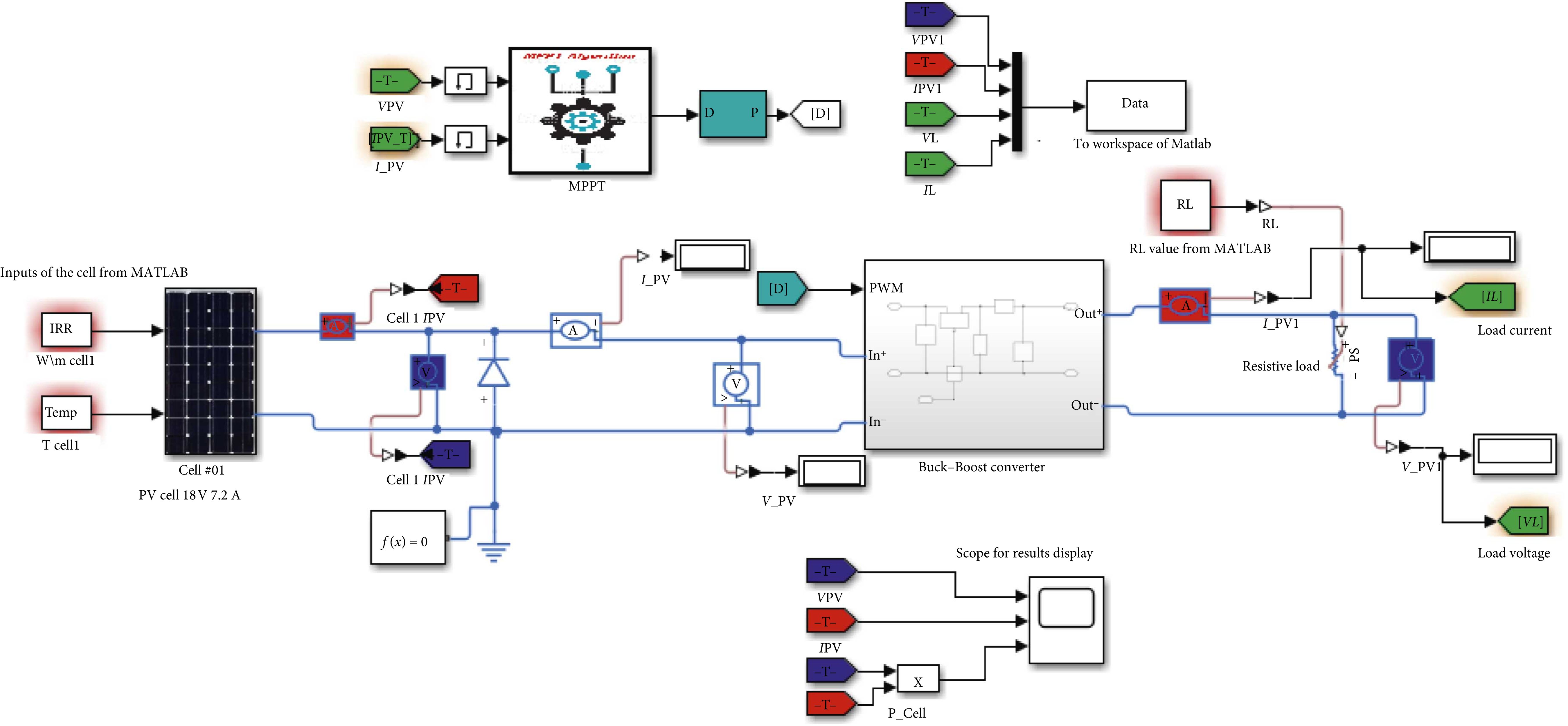
Metaheuristic Optimization of Fractional Order Incremental Conductance (FO-INC) Maximum Power Point Tracking (MPPT)
This paper seeks to improve the photovoltaic (PV) system efficiency using metaheuristic, optimized fractional order incremental conductance (FO-INC) control. The proposed FO-INC controls the output voltage of the PV arrays to obtain maximum power point tracking (MPPT). Due to its simplicity and efficiency, the incremental conductance MPPT (INC-MPPT) is one of the most popular algorithms used in the PV scheme. However, owing to the nonlinearity and fractional order (FO) nature of both PV and DC-DC converters, the conventional INC algorithm provides a trade-off between monitoring velocity and
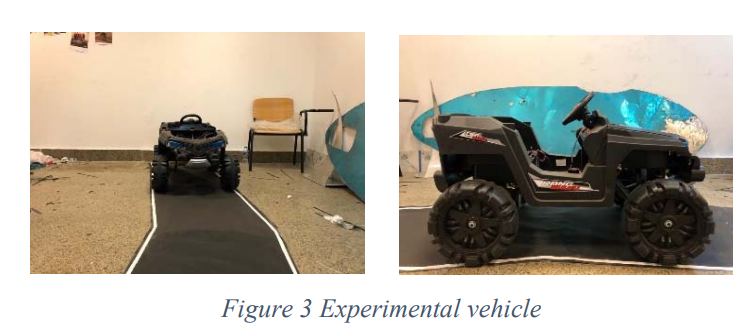
Steering Control for Autonomous Vehicles Using PID Control with Gradient Descent Tuning and Behavioral Cloning
In this paper we implement and evaluate two ways of controlling the steering angle of an autonomous vehicle, PID control with manual tuning followed by gradient descent algorithm tuning-which is able to enhance the performance through self-adjusting the controller parameters-and using supervised machine learning through the end-to-end deep learning for self-driving car which implement Convolutional Neural Network (CNN) to predict the steering angle for a given instance of a track. The verification testing went through two phases: software simulation using python for first run testing and C++