
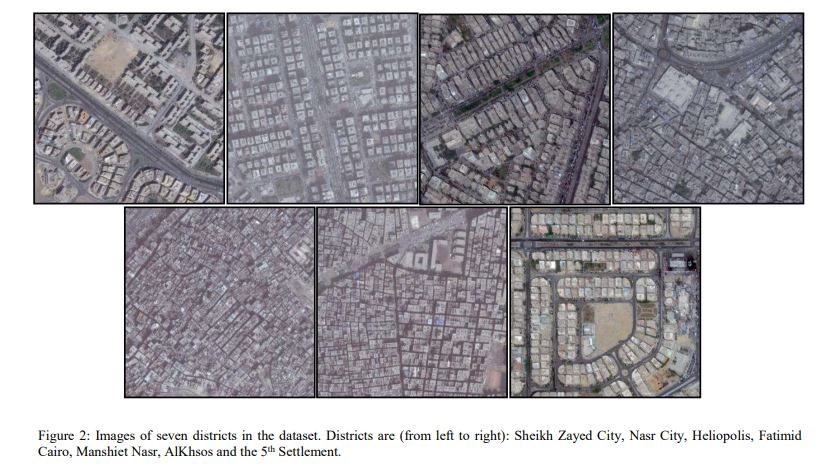
Convolutional Neural Network-Based Deep Urban Signatures with Application to Drone Localization
Most commercial Small Unmanned Aerial Vehicles (SUAVs) rely solely on Global Navigation Satellite Systems (GNSSs) - such as GPS and GLONASS - to perform localization tasks during the execution of autonomous navigation activities. Despite being fast and accurate, satellite-based navigation systems have typical vulnerabilities and pitfalls in urban settings that may prevent successful drone localization. This paper presents the novel concept of 'Deep Urban Signatures' where a deep convolutional neural network is used to compute a unique characterization for each urban area or district based on
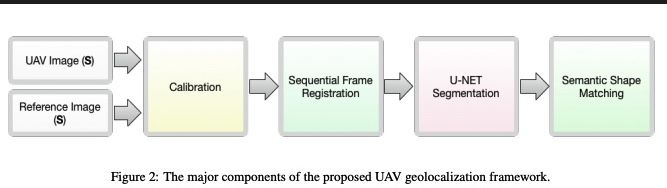
A deep CNN-based framework for enhanced aerial imagery registration with applications to UAV geolocalization
In this paper we present a novel framework for geolocalizing Unmanned Aerial Vehicles (UAVs) using only their onboard camera. The framework exploits the abundance of satellite imagery, along with established computer vision and deep learning methods, to locate the UAV in a satellite imagery map. It utilizes the contextual information extracted from the scene to attain increased geolocalization accuracy and enable navigation without the use of a Global Positioning System (GPS), which is advantageous in GPS-denied environments and provides additional enhancement to existing GPS-based systems
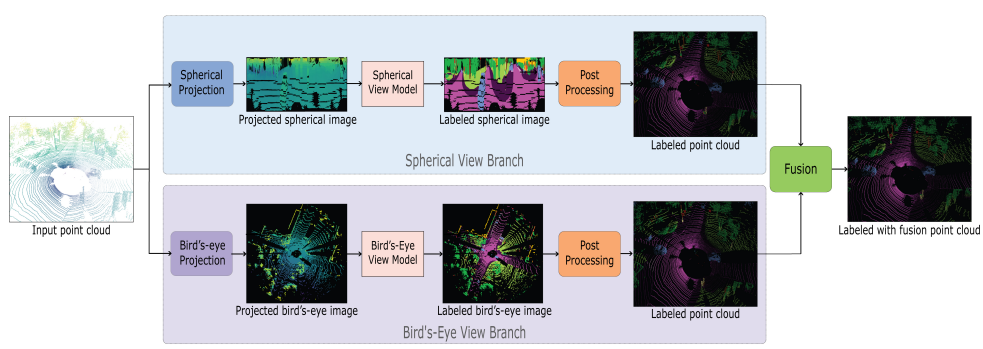
Multi projection fusion for real-time semantic segmentation of 3D LiDAR point clouds
Semantic segmentation of 3D point cloud data is essential for enhanced high-level perception in autonomous platforms. Furthermore, given the increasing deployment of LiDAR sensors onboard of cars and drones, a special emphasis is also placed on non-computationally intensive algorithms that operate on mobile GPUs. Previous efficient state-of-the-art methods relied on 2D spherical projection of point clouds as input for 2D fully convolutional neural networks to balance the accuracy-speed trade-off. This paper introduces a novel approach for 3D point cloud semantic segmentation that exploits
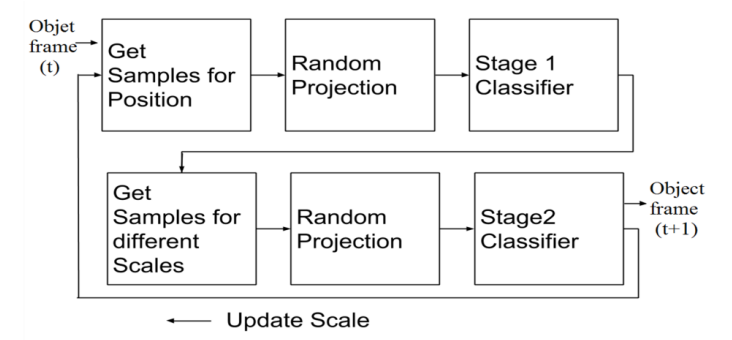
Real-time scale-adaptive compressive tracking using two classification stages
In this paper, we describe a method for Scale-Adaptive visual tracking using compressive sensing. Instead of using scale-invariant-features to estimate the object size every few frames, we use the compressed features at different scale then perform a second stage of classification to detect the best-fit scale. We describe the proposed mechanism of how we implement the Bayesian Classifier used in the algorithm and how to tune the classifier to address the scaling problem and the method of selecting the positive training samples and negative training samples of different scales. The obtained
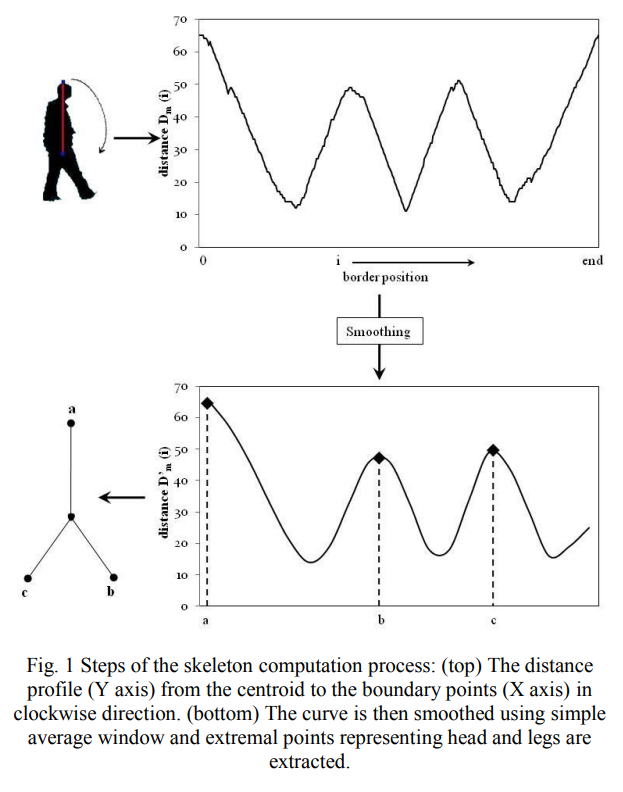
Change analysis for gait impairment quantification in smart environments
Visual Sensor Networks (VSNs) open up a new realm of smart autonomous applications based on enhanced three- dimensional sensing and collaborative reasoning. An emerging VSN application domain is pervasive healthcare delivery where gait information computed from distributed vision nodes is used for observing the wellbeing of the elderly, quantifying post-operative patient recovery and monitoring the progression of neurodegenerative diseases such as Parkinson's. The development of patient-specific gait analysis models, however, is challenging since it is unfeasible to obtain normal and impaired
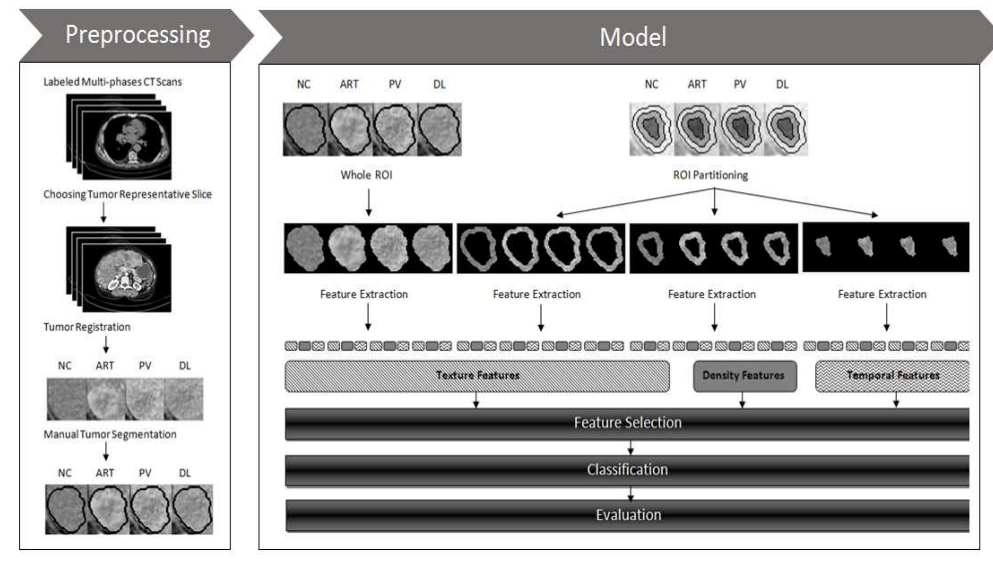
Combined regional and spatio-temporal approach improves hepatic tumors classification in Multiphase CT
In this work, we investigate the effect of using spatio-tepmoral features on a regional basis on the liver focal lesions classification performance in the multiphase CT images. Texture, Density, and temporal feature set and their different combinations along spatial partitioned ROI were investigated to better characterizing five hepatic pathologies from multiphase contrast-enhanced CT scans. Embedded feature selection followed by decision tree ensembles classification with ten folds cross-validation were employed to classify a total of 180 ROI includes normal tissues, cyst, haemangioma
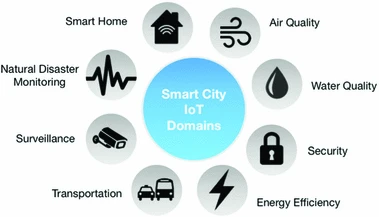
A survey on smart cities’ IoT
The rise of the Internet of Things (IoT) has led to a numerous and diverse amount of products and real life implementations for smart cities in the last few years. With the many opportunities and challenges, the academic and industrial field has come up with many hardware and middleware platforms. We categorise these different IoT applications and solutions into different domains and present an application for each. This survey aims at defining the state-of-the-art major and common technologies, frameworks, and applications used to open doors to drive future research and to spark new ideas for
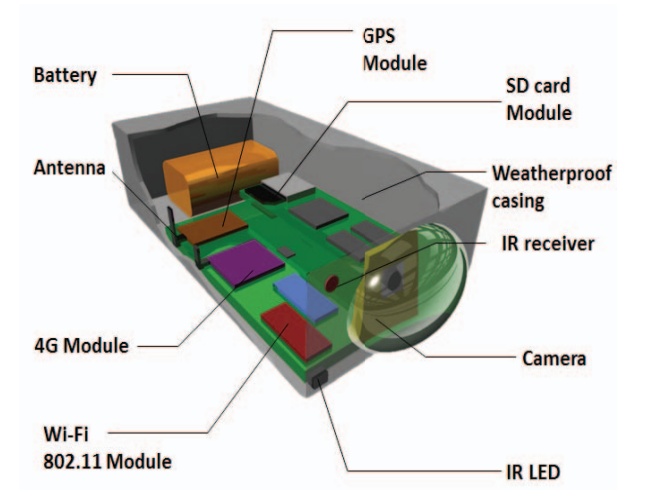
Traffisense: A smart integrated visual sensing system for traffic monitoring
Intelligent camera systems provide an effective solution for road traffic monitoring with traffic stream characteristics, such as volumes and densities, continuously computed and relayed to control stations. However, developing a functional vision-based traffic monitoring system is a complex task that entails the creation of appropriate visual sensing platforms with on-board visual analytics algorithms, integration of versatile technologies for data provision and stream management, and development of data visualization techniques suitable for end-users. This paper describes TraffiSense, a
Towards IT-Legal Framework for Cloud Computing
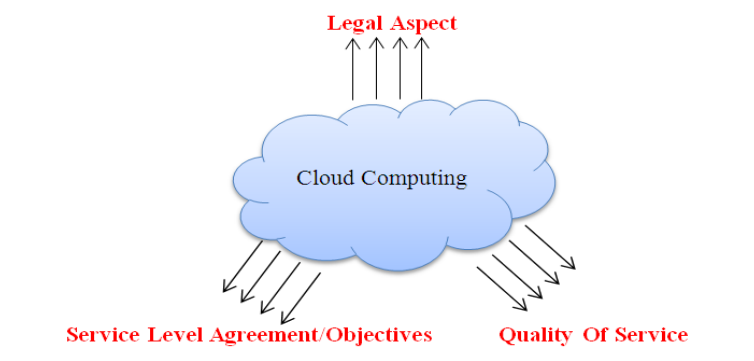
As the common understanding of Cloud Computing is continuously evolving, the terminology and concepts used to define it often need clarifying. Therefore, Cloud customers and Cloud Providers are used to dispute about Service Level Agreements, Service Level Objectives and Quality of Service. Simultaneously, SLAs/SLOs/QoS represent other related technical problems such as Security, Privacy, Compliancy and others. Technical problems are usually defined within technical context, where both parties ignore analyzing problem's legally related causes. In fact, these problems are stemming from the
New governance framework to secure cloud computing
Cloud computing is enabling proper, on-demand network access to a shared pool of computing resources that is elastic in reserve and release with minimal interaction from cloud service provider. As cloud gains maturity, cloud service providers are becoming more competitive, which increase the percentage of cloud adoption. But security remains the most cited challenge in Cloud. So, while we are progressing in cloud adoption, we have to define key elements of our cloud strategy and governance. Governance is about applying policies relating to used services. Therefore, it has to include the