
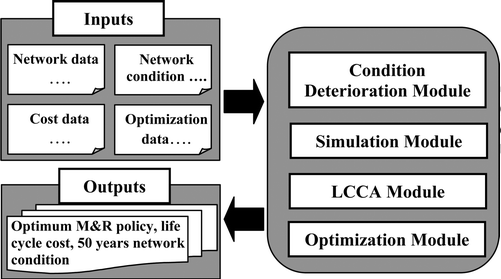
Multiobjective optimisation algorithm for sewer network rehabilitation
Understanding of deterioration mechanisms in sewers helps asset managers in developing prediction models for estimating whether or not sewer collapse is likely. Effective utilisation of deterioration prediction models along with the development and use of life cycle maintenance cost analysis contribute to reducing operation and maintenance costs in sewer systems. This article presents a model for life-cycle maintenance planning of deteriorating sewer network as a multi-objective optimisation problem that treats the sewer network condition and service life as well as life-cycle maintenance cost
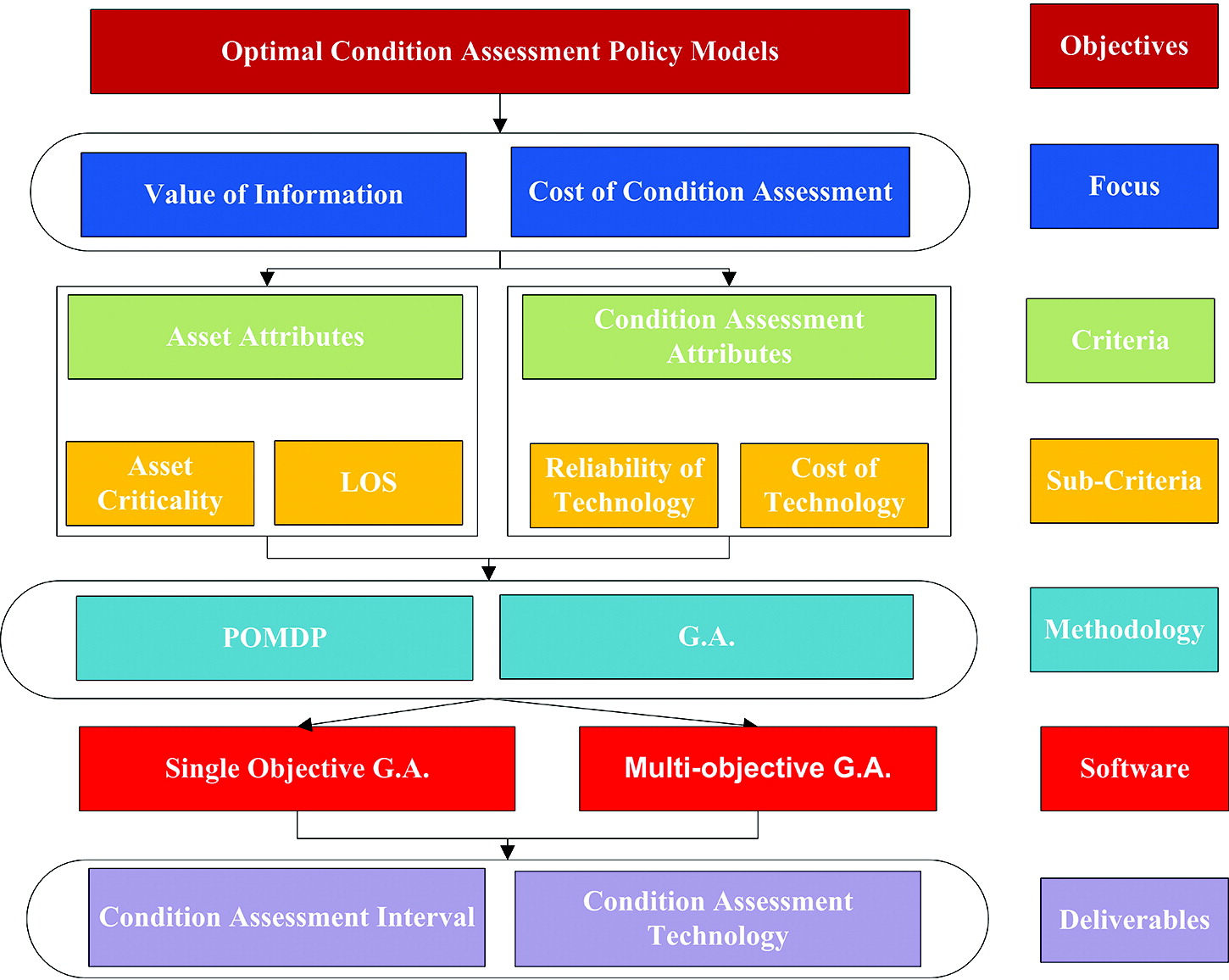
Multiobjective genetic algorithm to allocate budgetary resources for condition assessment of water and sewer networks
This paper presents a framework for optimizing condition assessment policies by balancing the revealed value of information with the cost of obtaining such information. The computational platform is based on augmenting the asset condition state with an expected level of accuracy. Inaccuracies due to condition assessment reliability are evaluated using the partially observable Markov decision process. The single objective genetic algorithm is used to select the most cost-effective assets to assess considering information inaccuracy under a fixed budget. The model is extended using
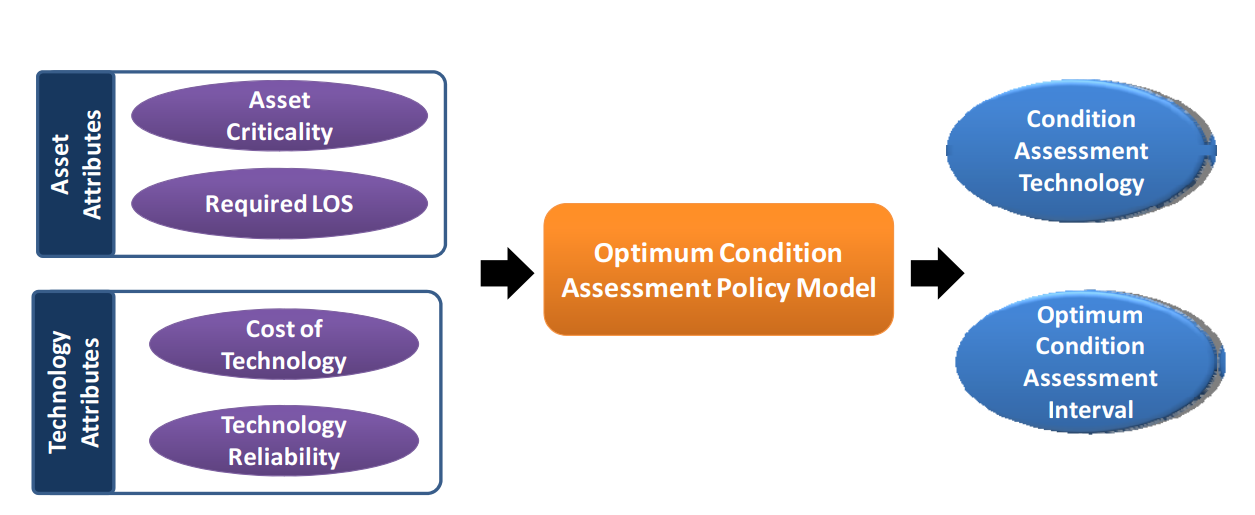
Towards optimum condition assessment policies for water and sewer networks
With ageing water and sewer infrastructure in North America, assessing the condition of these assets has received increased attention in the past few years. Condition assessment is an integral component in any asset management program. Determining the condition of buried infrastructure tends to be more cumbersome, costly and error-prone compared to other surface infrastructure like roads and buildings. For sewers, CCTV is considered the industry standard for condition assessment technologies. For pressurized water pipelines, technologies tend to be more costly and uncertain (e.g
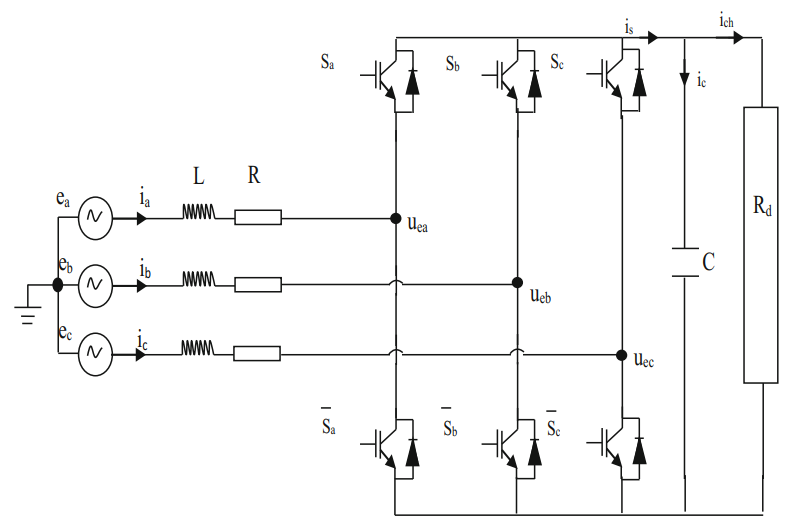
Comparative Study of Two Level and Three Level PWM-Rectifier with Voltage Oriented Control
This article presents performance evaluation and comparison between Voltage Oriented Control (VOC) methods for PWM-rectifiers, two levels and three levels, in order to demonstrate the great advantages of using a three-level Neutral Point Clamped (NPC). The control of the DC bus voltage is carried out using the PI controller. The effectiveness of this approach is illustrated by simulation results using MATLAB/Simulink. © Springer Nature Switzerland AG 2019.
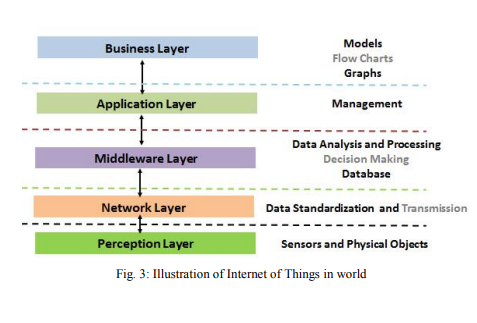
Architectures and Challenges Towards Software Defined Cloud of Things (SDCoT)
Last decade witnessed a growth on developing of IoT architecture models to cope with various challenges and domains requirements. This leads to rapid increasing the number of the connected devices, which means large amount of data are needed to be stored and processed. Form this context, Cloud Computing is emerged as a solution to enable centrally unlimited storage of data and programs with the ability to access anytime from anywhere. The integration between IoT and cloud brings the concept of Cloud of Things (CoT) to support different types of data and multiple services with data ubiquity
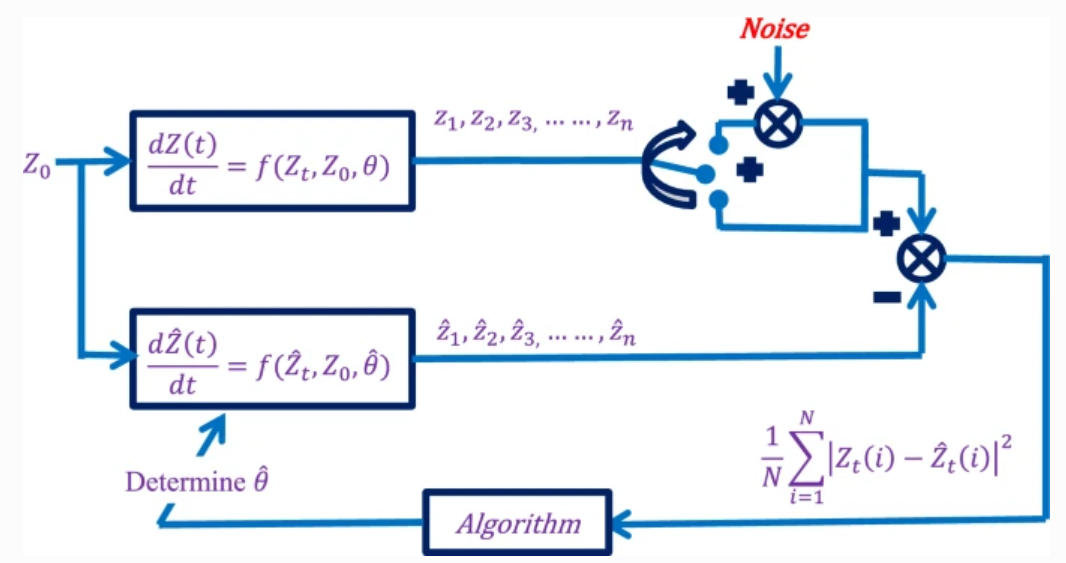
Fractional chaos maps with flower pollination algorithm for chaotic systems’ parameters identification
Meta-heuristic optimization algorithms are the new gate in solving most of the complicated nonlinear systems. So, improving their robustness, reliability, and convergence speed is the main target to meet the requirements of various optimization problems. In the current work, three different fractional-order chaos maps (FC-maps), which have been introduced recently, are incorporated with the fundamental flower pollination algorithm to tune its parameters adaptively. These maps are fractional logistic map, fractional sine map, fractional tent map, and their integer-order versions. As a result
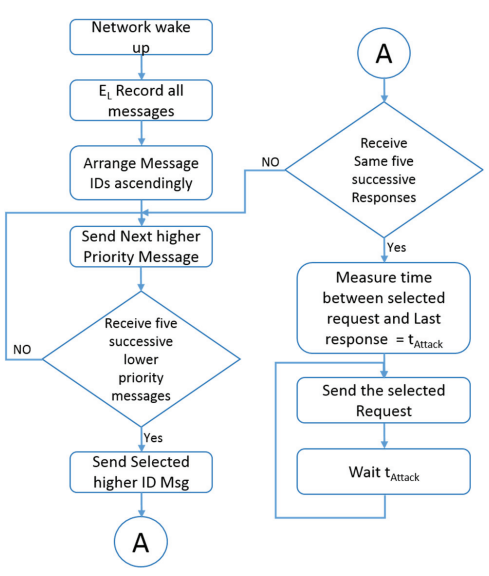
Replay attack on lightweight CAN authentication protocol
Day after day, users' expectations of tomorrow vehicles' features are increasing. Although the industry's prime goal is users' satisfaction, many unsolved problems are still present. Amongst the major challenges are the huge interconnections and dependability within the Electronic Control Unit (ECU) used inside vehicles. Five years ago, the number of ECUs within a vehicle was about 70 ECUs. This number has doubled nowadays, and it is expected to double again in the near future. This adds challenges to both of network management and network security. The purpose of this paper is to enhance the
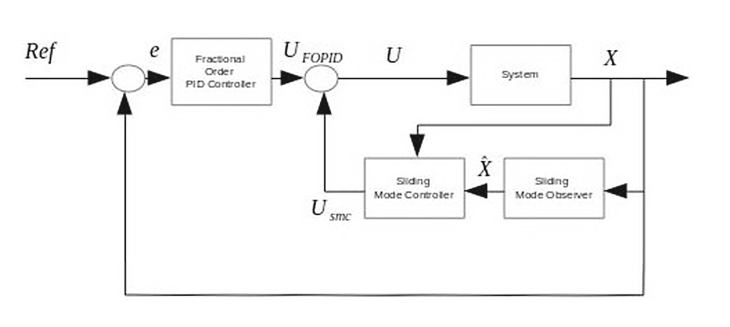
Fractional Order Sliding Mode PID Controller/Observer for Continuous Nonlinear Switched Systems with PSO Parameter Tuning
In this article a fractional order sliding mode PID controller and observer for the stabilization of continuous nonlinear switched systems is proposed. The design of the controller and observer is done following the separation principle, this means that the observer and controller are designed in a separate fashion, so a hybrid controller is implemented by designing the sliding mode controller part using an integral sliding mode surface along with a PIλDμ controller part which is the fractional order PID controller that is implemented to stabilizes the system. For the observer part, an
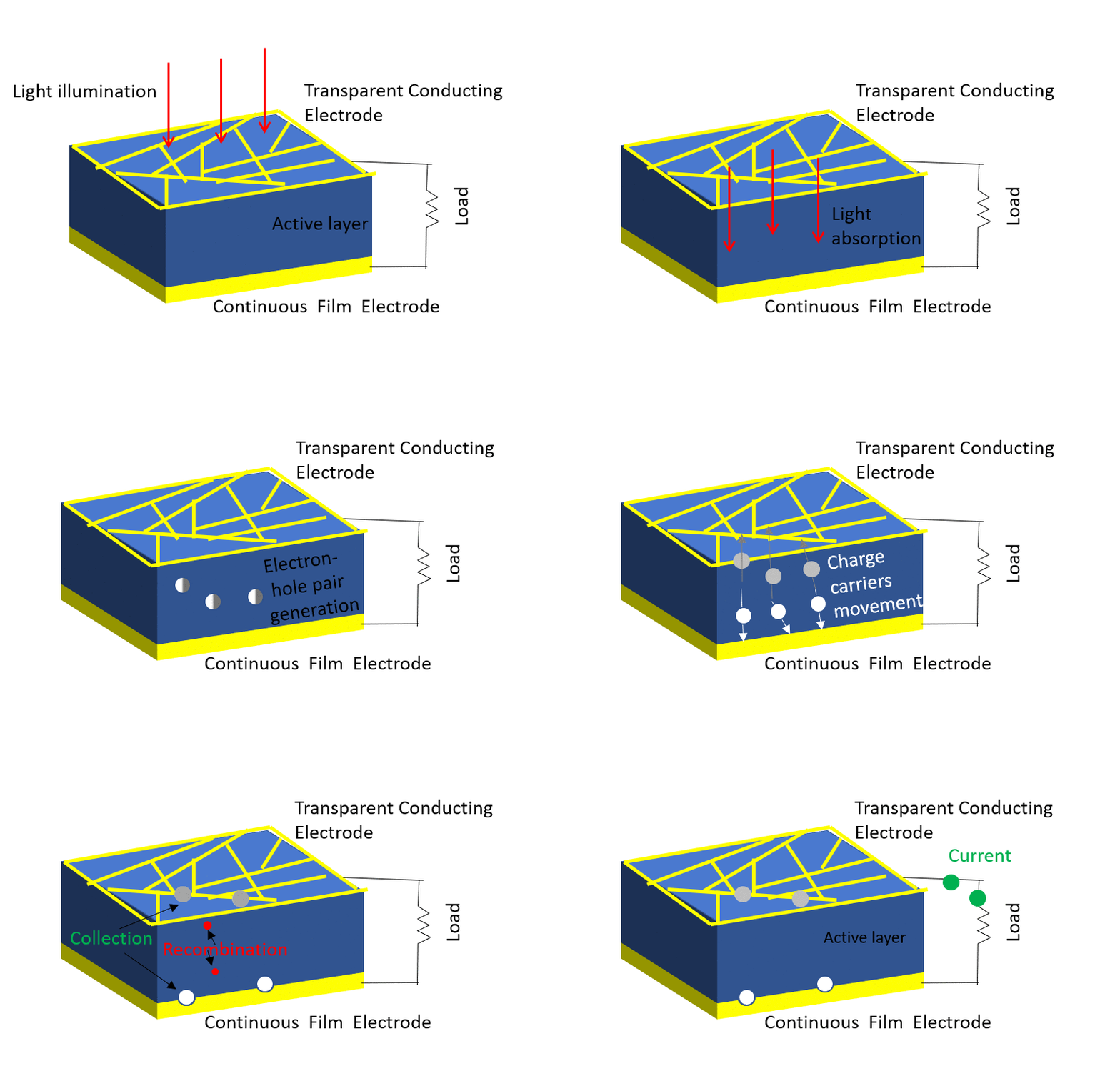
Investigation of properties limiting efficiency in Cu2ZnSnSe4-based solar cells
We have investigated different nonidealities in Cu2ZnSnSe4-CdS-ZnO solar cells with 9.7% conversion efficiency, in order to determine what is limiting the efficiency of these devices. Several nonidealities could be observed. A barrier of about 300 meV is present for electron flow at the absorber-buffer heterojunction leading to a strong crossover behavior between dark and illuminated current-voltage curves. In addition, a barrier of about 130 meV is present at the Mo-absorber contact, which could be reduced to 15 meV by inclusion of a TiN interlayer. Admittance spectroscopy results on the
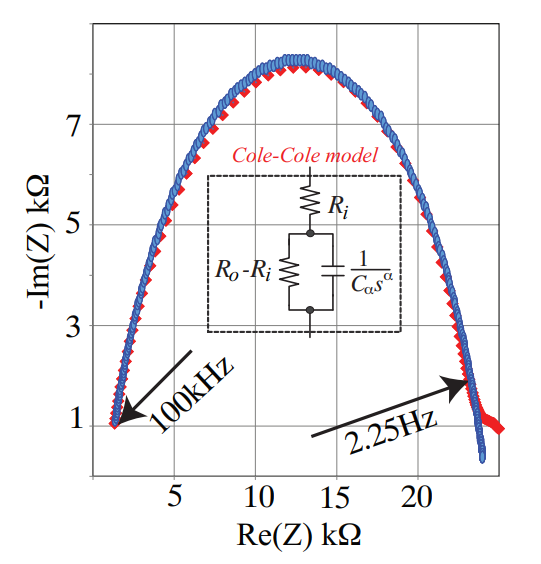
Cole-Cole Bio-Impedance Parameters Extraction from a Single Time-Domain Measurement
We show that the four parameters of a single-dispersion Cole-Cole bio-impedance model can be extracted from an one time-domain measurement with a fixed frequency. In particular, a periodic triangle waveform current excitation signal is injected into the biological sample under study while measuring the voltage developed across this sample in a galvanostatic measurement setup. The voltage response due to this triangle-wave excitation is firstly analytically derived in closed form. After that the Flower Pollination optimization Algorithm (FPA) is applied to extract the unknown model parameters