
(562bb) Semi-pilot plant for tertiary treatment of domestic wastewater using algal photo-bioreactor, with artificial intelligence
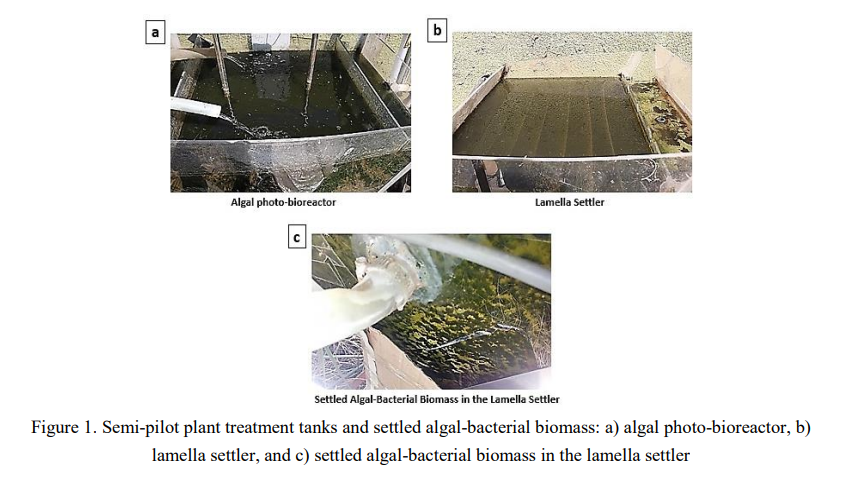
This study attempted to investigate the removal of biological oxygen demand (BOD), chemical oxygen demand (COD), total suspended solids (TSS), ammonia-nitrogen (NH4-N), and total phosphorus (TP) from secondary treated domestic wastewater using algal photo-bioreactor. A semi-pilot plant was constructed and operated for 112 days under continuous flow conditions at Zenin wastewater treatment plant, Giza, Egypt (WWTP) which consists of an algal photo-bioreactor with an effective volume of 188 litters and a lamella settler. The removal of the studied parameters was studied at different hydraulic
(670d) Study the degradation and adsorption processes of organic matters from domestic wastewater using chemically prepared and green synthesized nano zero-valent iron
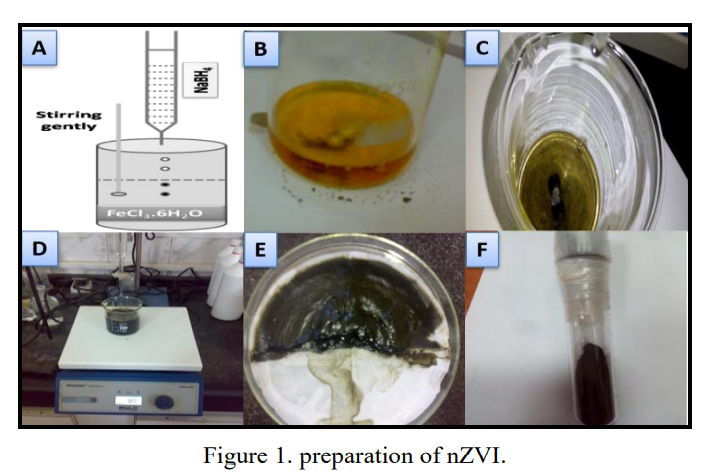
Advanced oxidation processes (AOPs) using chemically prepared and green synthesized nano zero-valent iron (nZVI) has proved to be effective in removing organic contaminants. The green synthesized nano iron (GT-nZVI) was prepared by using extracted black tea reducing agent. The prepared nZVI particles were characterized using X-ray powder diffraction (XRD), scanning electron microscopy (SEM), and Energy Dispersive X-ray Analysis (EDAX) analysis. The main purpose of this study is to compare between chemically prepared nZVI and GT-nZVI in the biological oxygen demand (BOD) removal efficiency from
Refractive index extraction and thickness optimization of Cu2ZnSnSe4 thin film solar cells
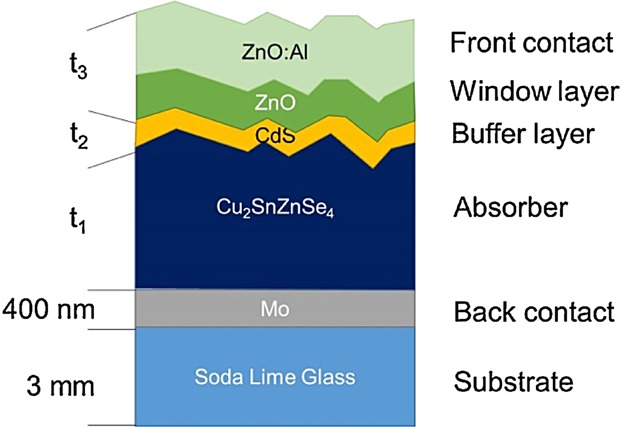
Cu2ZnSnSe4 (CZTSe) thin film solar cells are promising emergent photovoltaic technologies based on low-bandgap absorber layer with high absorption coefficient. To reduce optical losses in such devices and thus improve their efficiency, numerical simulations of CZTSe solar cells optical characteristics can be performed based on individual optical properties of each layer present in the cell structure. In this contribution, we have first determined the optical coefficients of individual thin films (i.e., (n, k) of the absorber, buffer, and window layers) to build a realistic model simulating the
Reliable Collaborative Semi-infrastructure Vehicle-to-Vehicle Communication for Local File Sharing
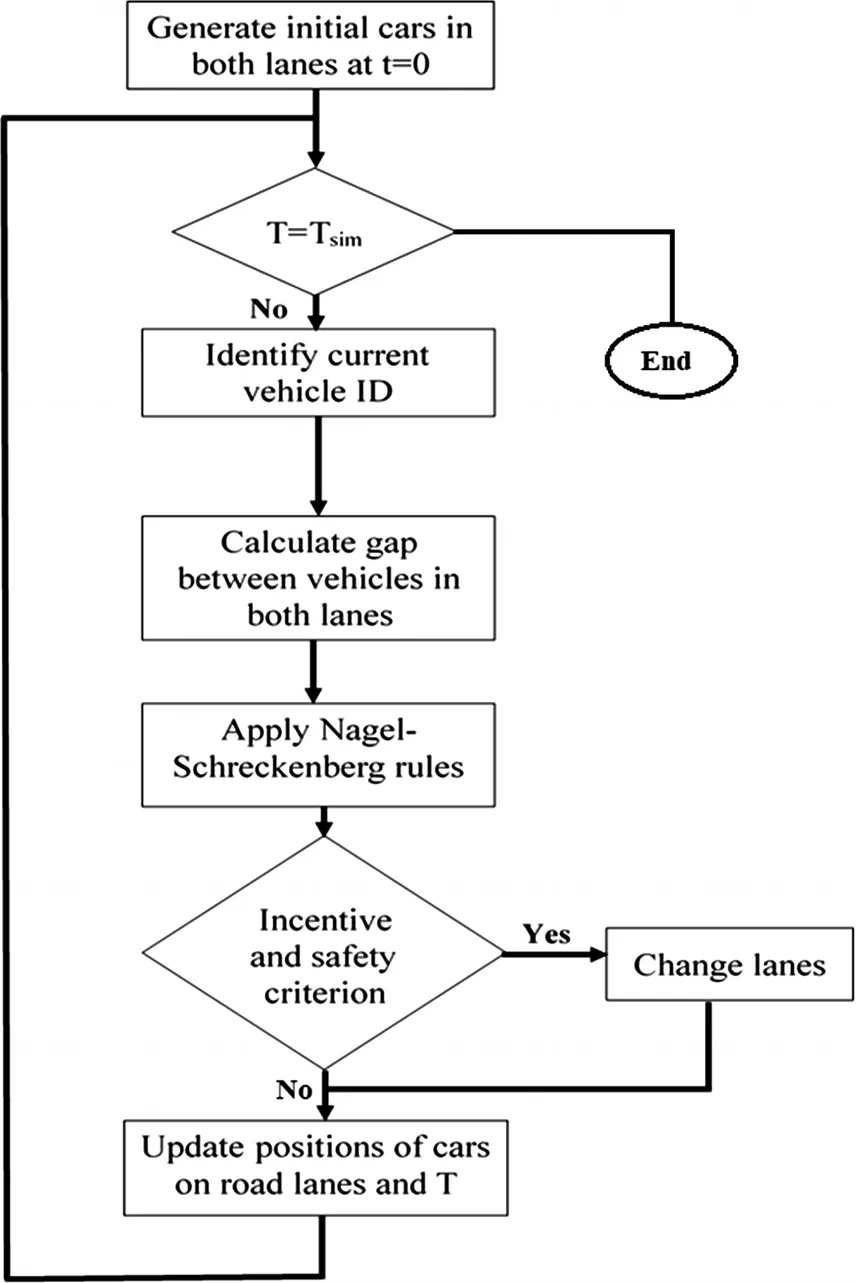
Recently, Vehicular Cloud Communication (VCC) has been gaining momentum targeting intelligent and efficient data transmission. VCC is a type of mobile ad-hoc network comprising heterogeneous vehicles sharing their resources to perform collaborative activities. In this paper, we propose a new semi-infrastructure file-browsing in order to provide Network as a service (NaaS) enabling internet-independent browsing. In our scenario, a central management platform plays the role of controlling and managing the selection of relaying vehicles supporting the source to destination file transmission
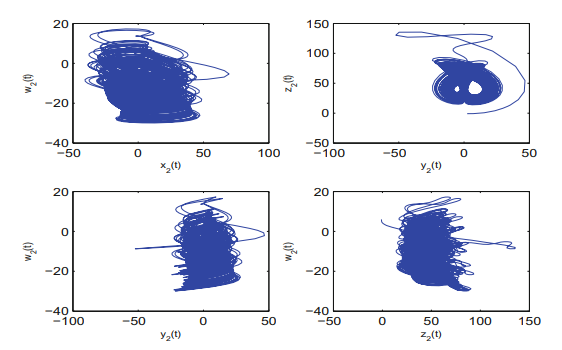
Combination-Combination Anti-Synchronization of Four Fractional Order Identical Hyperchaotic Systems
In this manuscript, we investigate the methodology of combination-combination anti-synchronization of four identical fractional order hyperchaotic system. The methodology is implemented by considering a 4D fractional order hyperchaotic system. The controllers are constructed using adaptive control technique to ensure the combination-combination anti - synchronization. The synchronization schemes such as chaos control problem, projective anti-synchronization, combination anti-synchronization becomes the special cases of combination-combination anti-synchronization. The combination - combination

Control and synchronization of a fractional order hyperchaotic system via backstepping and active backstepping approach
During the last 10 years, fractional calculus has find its application in almost every field of science and engineering. One of the well-studied application area is control engineering. Fractional calculus gives a more realistic modeling of linear and nonlinear systems which are called as fractional order systems. Fractional order control is another area of study under this field. Fractional order chaotic systems have become a great topic of research in recent years as these systems have certain advantages over integer order systems. Fractional order chaotic systems give a wide variety of
Design of fractional order fuzzy sliding mode controller for nonlinear complex systems
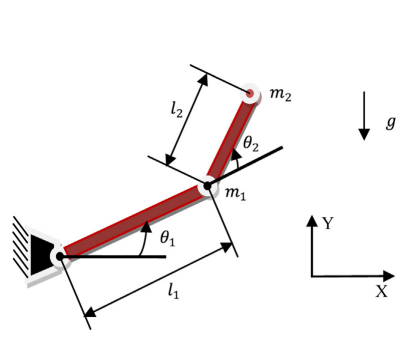
Controlling a nonlinear, time-varying, uncertain, coupled multiinput-multioutput (MIMO) complex system is always a challenging task for control engineers. A linear PID controller is not able to control effectively these complex systems and a robust adaptive controller is needed for perfect control. In this chapter, a fractional order fuzzy sliding mode proportional derivative (FOFSMCPD) controller is presented to control a two-link planar rigid robotic manipulator system. Literature reveals that sliding mode controllers (SMC) have the serious issue of fast oscillations, called chattering, in
Bridge information modeling in sustainable bridge management
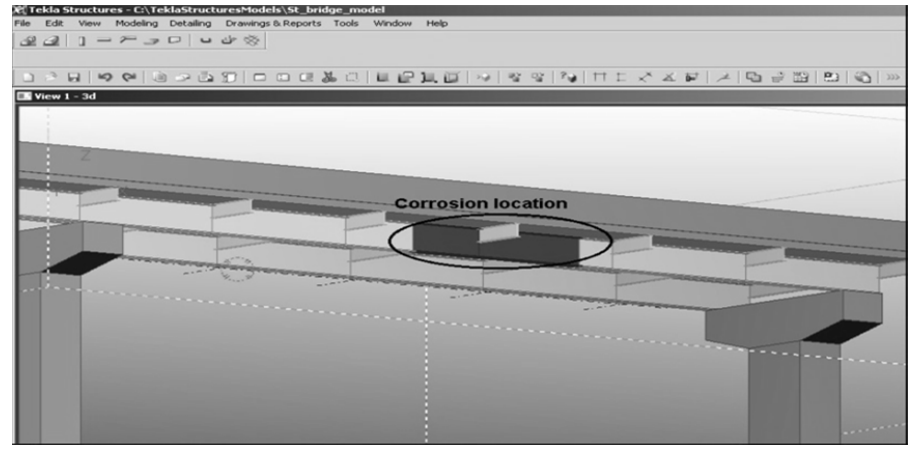
Bridge Management Systems (BMS) play a crucial role in maintenance and rehabilitation decisions related to bridges. This paper presents using Bridge Information Modeling (BrIM) framework that adopts BMS features including; databases, inspection module, and condition assessment module. The proposed BrIM framework creates a database of bridges' components and generates inspection spreadsheets. It also visualizes bridge components considering the information stored in the database and inspection spreadsheets, using Structured Query Language (SQL) statements. The paper presents the integration of
IoT Systems Internal Mapping using RTT with the integration of Blockchain technology
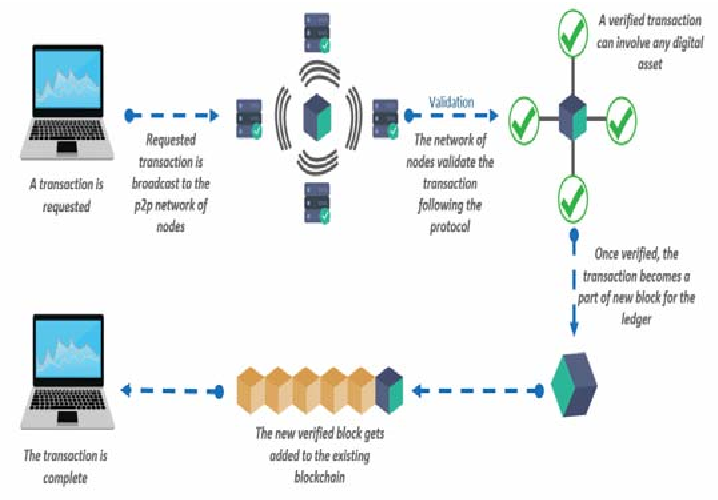
The degree to which innovators adopt Blockchain as a tool to create relevant and useful business solutions will determine how fast and far the platform moves into our daily lives. There are limitless opportunities for technology to define and shape future innovation. In a world dominated by digital technology, IoT plays a prominent role in our lives. It has created an ecosystem that links many systems to give smart performances in every task. The proliferation of the IoT has created a new evolution of cell phones, home and other embedded applications that are all connected to the internet
Conceptual cost estimation of pump stations projects using fuzzy clustering
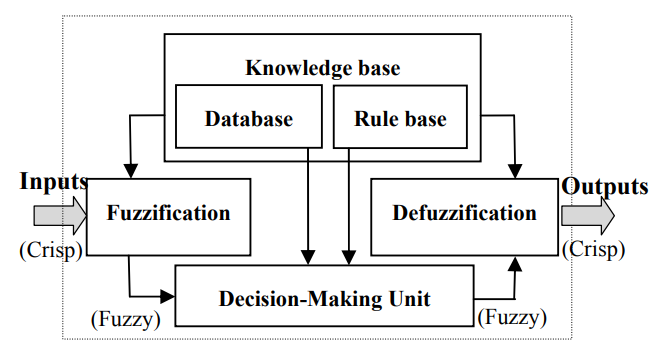
Conceptual cost estimates, are prepared at the very early stages of a project, and generally before the construction drawings and specifications are available. At this stage, cost estimates are needed by the owner, contractor, designer, or funding agencies for determination of the feasibility of a project, financial evaluation of a number of alternative projects, or establishment of an initial budget. Traditional approaches rely heavily on experienced engineers. This paper presents a method using fuzzy clustering technique for pump station projects cost estimation. The proposed conceptual cost