
Fractional sequential sensing for energy efficient cooperative cognitive radio networks
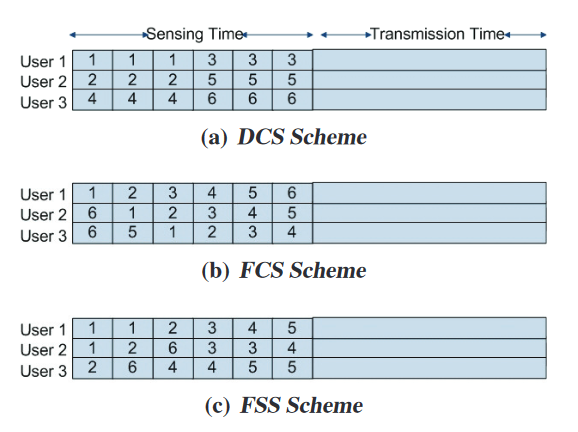
In this paper, we propose fractional sequential sensing (FSS) as a novel cooperative sensing scheme for cognitive radio networks. FSS compromises a tradeoff between sensing accuracy and efficiency by formulating an optimization problem whose solution identifies FSS sensing parameters. These parameters include the sensing period and channels allocated for each user. Our simulation results show that FSS successfully improves the sensing accuracy while maintaining a low power profile. Additionally, we show that the sensing accuracy performance gap between FSS and other traditional schemes
Cooperative cognitive relaying under primary and secondary quality of service satisfaction
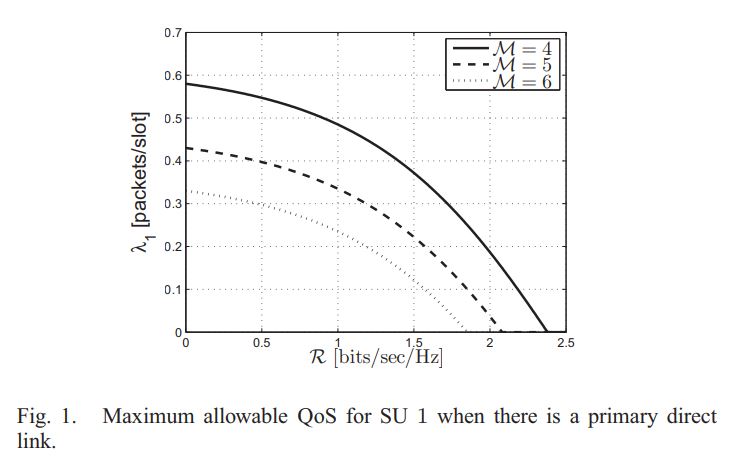
This paper proposes a new cooperative protocol which involves cooperation between primary and secondary users. We consider a cognitive setting with one primary user (PU) and multIPle secondary users (SUs). The time resource is partitioned into discrete time slots. Each time slot, one of the SUs is scheduled for transmission according to time division multIPle access scheme, and the remainder of the SUs, which we refer to as secondary relays, attempt to decode the primary packet. If more than one relay can decode the primary packet, the secondary relays then employ cooperative beamforming to
Equal-priority multiple access communications with minimum queuing delay
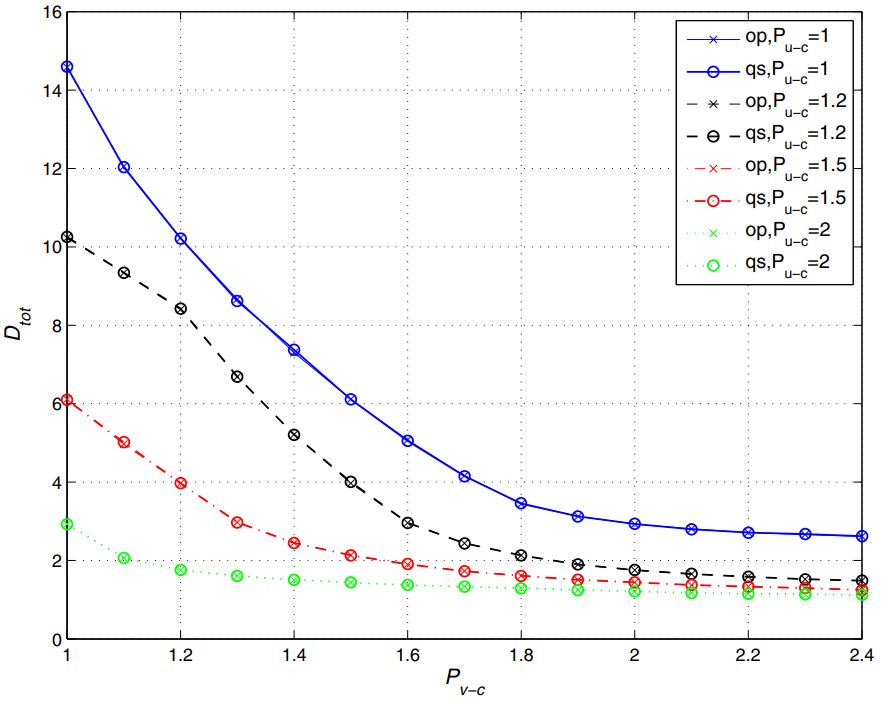
In this paper, a multiple-access wireless network consisting of two transmitters and one receiver is considered. The transmitters can access the same channel simultaneously and the receiver performs successive interference cancellation (SIC) to decode the messages from both senders. A two-dimensional Markov chain is used to model the medium access control layer behavior of the system, where the state represents the queue length of the transmitters. In this model a general number of packets can be transmitted from any user in a single time slot. A probabilistic cross-layer scheme is proposed to
Novel cooperative policy for cognitive radio networks: Stability region and delay analysis
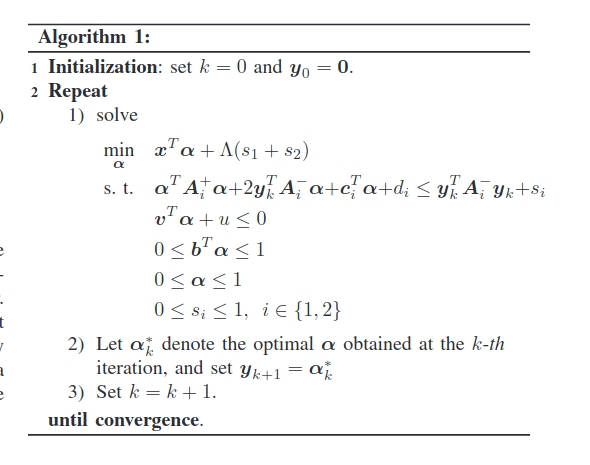
We consider a cognitive radio system that consists of primary user, secondary user, and their destinations. The secondary user has a relaying capability, i.e., it transmits the relayed packets from the primary user. Unlike most of the previous works that restrict the secondary user to transmit only in the idle time slots, we assume that the secondary user interferes on the primary user with certain probability that is optimized to maximize the stable throughput of the secondary network under certain level of quality of service constraints for the primary one. We show how significantly our
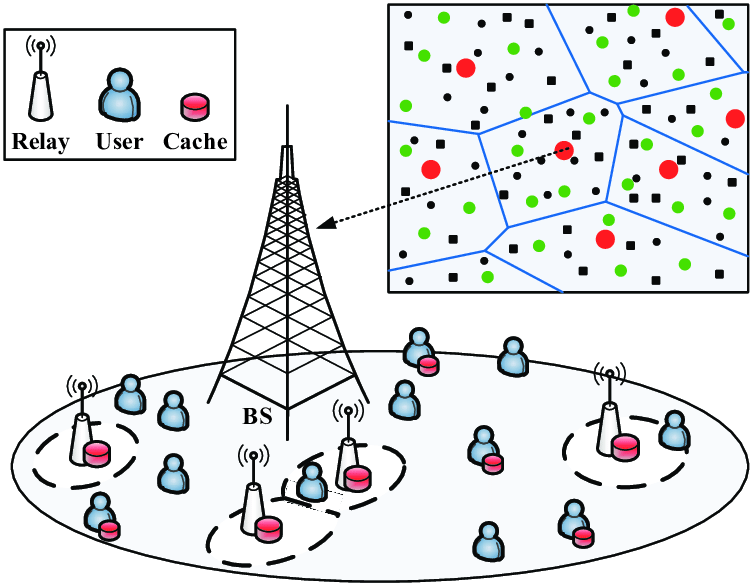
Cache-aided heterogeneous networks: Coverage and delay analysis
This paper characterizes the performance of a generic K-tier cache-aided heterogeneous network (CHN), in which the base stations (BSS) across tiers differ in terms of their spatial densities, transmission powers, pathloss exponents, activity probabilities conditioned on the serving link and placement caching strategies. We consider that each user connects to the BS which maximizes its average received power and at the same time caches its file of interest. Modeling the locations of the BSS across different tiers as independent homogeneous Poisson Point processes (HPPPs), we derive closed-form
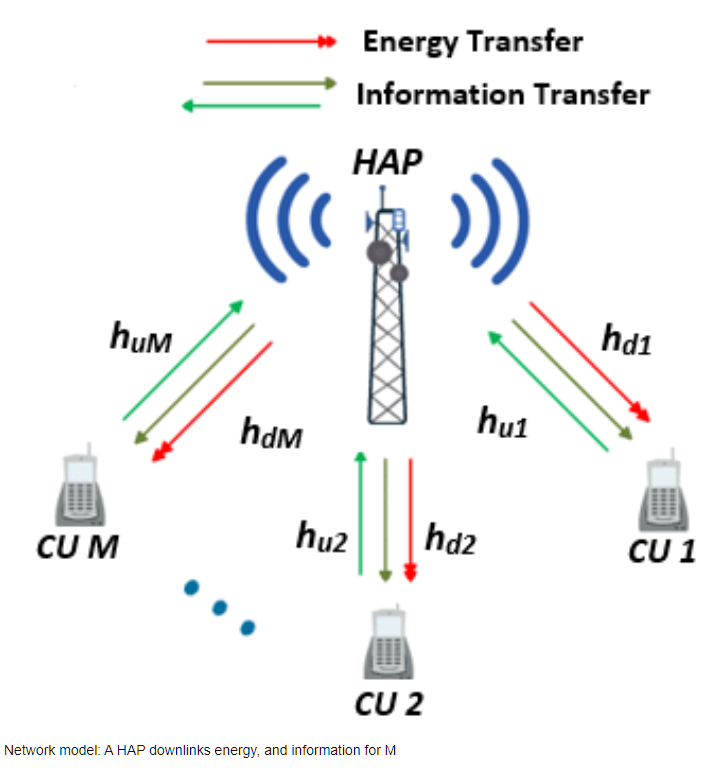
Optimal uplink and downlink resource allocation for wireless powered cellular networks
In this paper, we characterize optimal resource allocation for the uplink and downlink of wireless powered cellular networks (WPCNs). In particular, we investigate a time-slotted WPCN, where a hybrid access point (HAP) is in charge of energy replenishing of M cellular users (CUs), along with transmission/reception of information to/from them. Unlike prior works, which give attention to information transmission in only one direction (either uplink or downlink), our work incorporates information transmission in both directions, along with energy transfer over the downlink. Besides harvesting
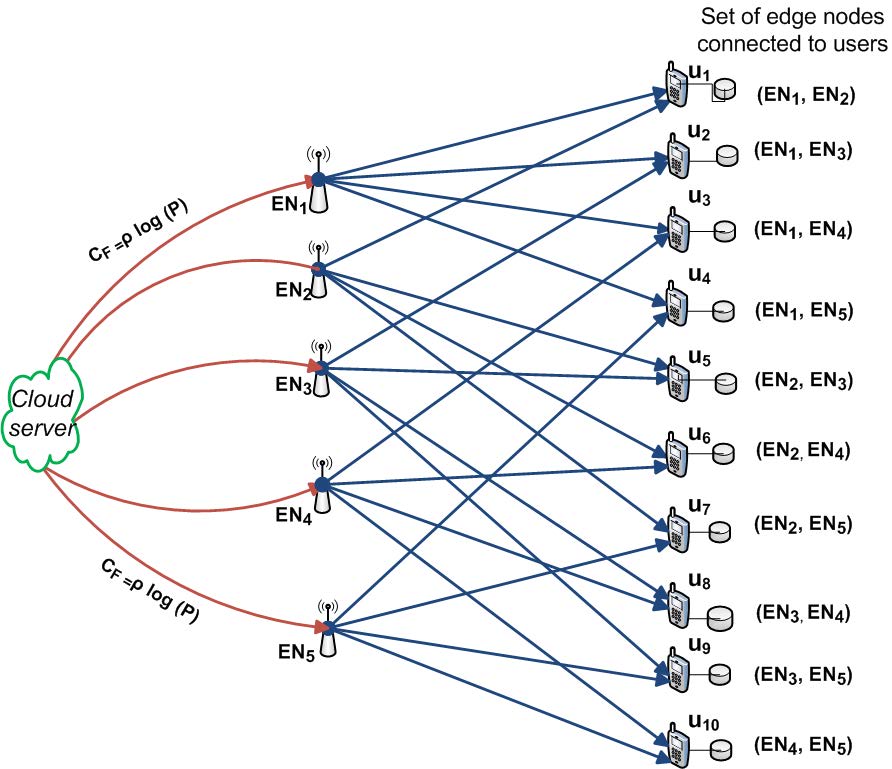
Cache-aided fog radio access networks with partial connectivity
Centralized coded caching and delivery is studied for a partially-connected fog radio access network (F-RAN), whereby a set of H edge nodes (ENs) (without caches), connected to a cloud server via orthogonal fronthaul links, serve K users over the wireless edge. The cloud server is assumed to hold a library of N files, each of size F bits; and each user, equipped with a cache of size MF bits, is connected to a distinct set of r ENs; or equivalently, the wireless edge from the ENs to the users is modeled as a partial interference channel. The objective is to minimize the normalized delivery time
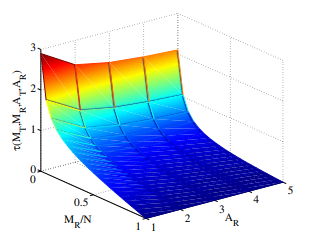
Coded Caching and Spatial Multiplexing Gains in MIMO Interference Networks
This paper studies the Multi-Input-Multi-Output (MIMO) interference networks with arbitrary number of transmitters and receivers, where both the transmitters and receivers are equipped with caches. Our objective is to propose content placement and delivery schemes that minimize the worst case normalized delivery time (NDT). First, we design a delivery scheme for the cache-aided Single-Input-Multiple-Output (SIMO) interference networks. Then, we obtain the achievable NDT of the cache-aided MIMO interference networks by using the decomposition property. The numerical results show the superiority
Stability Analysis of Slotted Aloha with Opportunistic RF Energy Harvesting
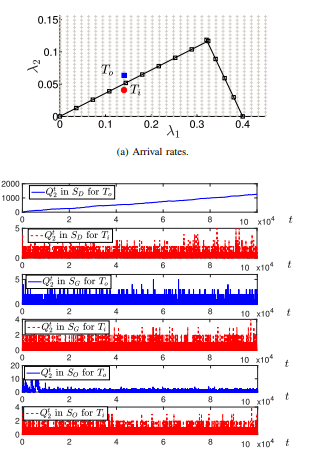
Energy harvesting (EH) is a promising technology for realizing energy-efficient wireless networks. In this paper, we utilize the ambient RF energy, particularly interference from neighboring transmissions, to replenish the batteries of the EH enabled nodes. However, RF energy harvesting imposes new challenges into the analysis of wireless networks. Our objective in this paper is to investigate the performance of a slotted Aloha random access wireless network consisting of two types of nodes, namely Type I, which has unlimited energy supply and Type II, which is solely powered by an RF energy
A novel stochastic geometrical model for wideband MIMO-V2V channels
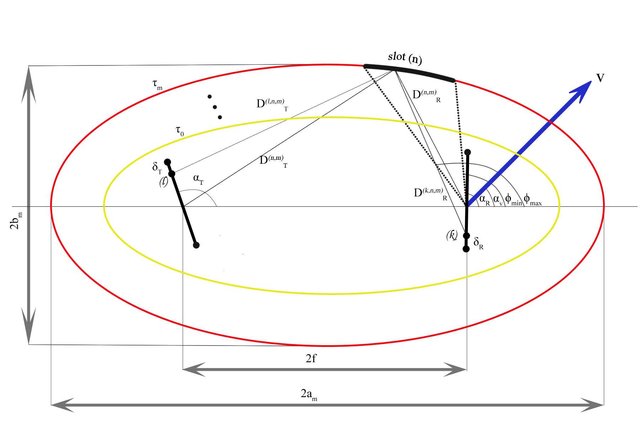
In this paper, we present a novel wideband multiple-input multiple-output Vehicle-to-Vehicle channel model. The proposed channel model is derived using the geometrical elliptical scattering approach. In order to emulate the appearance and disappearance of scatterers (vehicles, terrain, roadside units, etc.) in the environment, we associate a persistence process with each physical scatterer in the model. The parameters of the proposed model can be tuned to represent a variety of vehicular environments. We also derive the temporal and spatial correlation functions of the channel coefficients